
 Available in GB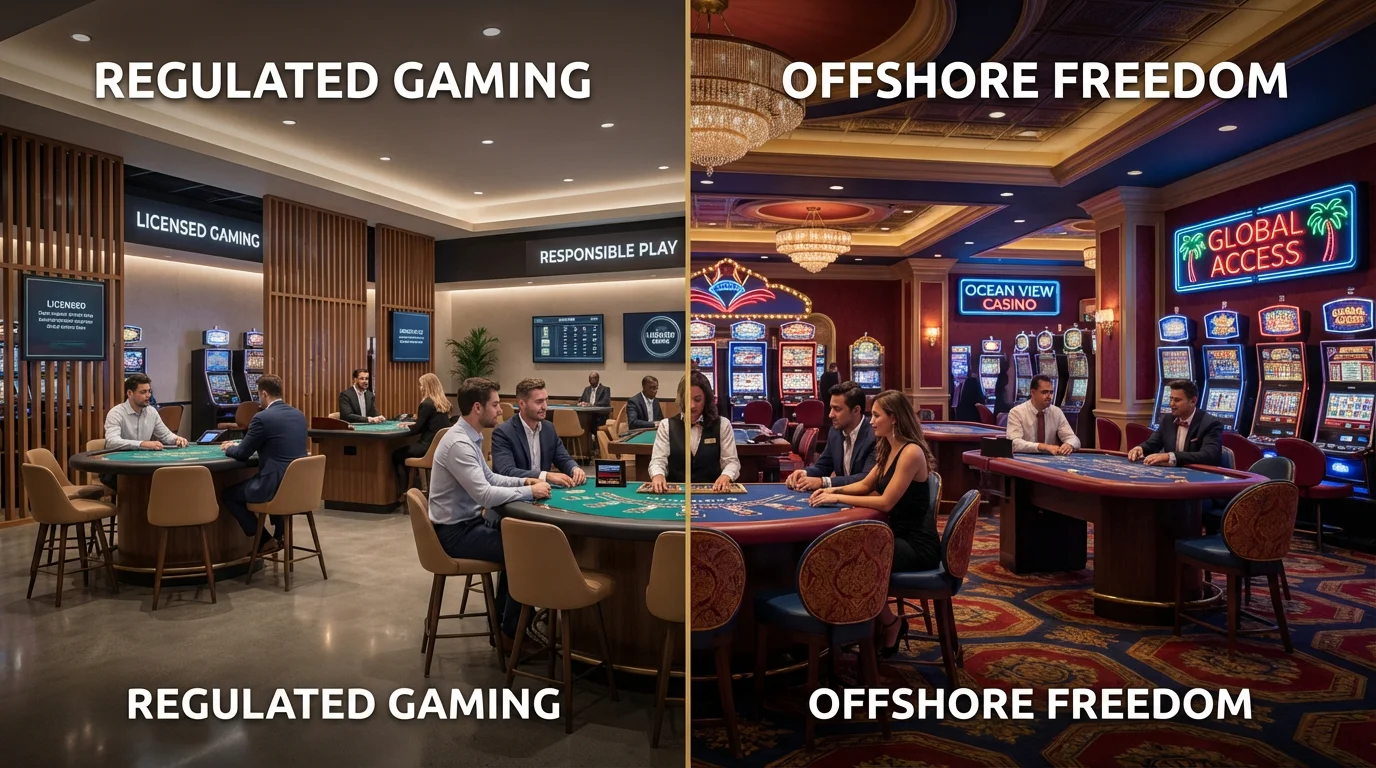
Two Systems, Two Sets of Trade-offs
Neither option is objectively better — each serves a different type of player. The comparison between UKGC-licensed casinos and non-GamStop alternatives isn’t a quality ranking. It’s a trade-off analysis. Each system offers advantages the other doesn’t, and each imposes costs the other avoids. The right choice depends on what you value most: regulatory protection and standardised safeguards, or flexibility and freedom from institutional oversight.
Framing this as “good vs bad” misrepresents both sides. UKGC casinos are not flawless — their bonuses are smaller, their limits are restrictive, and their affordability checks frustrate players who can comfortably sustain their spending. Non-GamStop casinos are not inherently dangerous — many operate professionally, process withdrawals promptly, and offer a player experience that matches or exceeds their regulated counterparts. The difference is in the systems that surround the casino, not in the casino itself.
Regulatory Differences: UKGC vs Offshore Authorities
UKGC oversight is comprehensive but restrictive. Offshore licensing is flexible but thinner. The regulatory frameworks governing these two categories of casino differ in scope, enforcement capability, and the practical protections they provide to players.
The UK Gambling Commission enforces one of the most stringent gambling regulatory regimes in the world. Licence conditions cover advertising standards, bonus term transparency, responsible gambling tool provision, fund segregation, anti-money-laundering compliance, and player complaint handling. Operators face fines measured in millions of pounds for non-compliance, and licence revocation is a real threat. The UKGC investigates complaints, conducts audits, and publishes enforcement actions publicly. Players at UKGC-licensed casinos benefit from this framework whether they’re aware of it or not.
Offshore licensing authorities — Curaçao, Anjouan, Kahnawake, and others — operate on lighter frameworks. Curaçao’s reformed licensing system, managed by the Curaçao Gaming Authority since December 2024 under the new LOK (National Ordinance on Games of Chance), has tightened requirements around KYC, AML, and player protection. But the enforcement history is shorter, the staffing is smaller, and the track record of resolving player complaints is less established. Anjouan’s regulatory framework is newer still and largely untested. Other offshore jurisdictions occupy various points on the spectrum between token oversight and developing regulation.
The practical difference for players: if a UKGC-licensed casino freezes your account or delays a withdrawal, you can file a complaint with the Gambling Commission and escalate to an approved alternative dispute resolution (ADR) service. The process is structured, time-bound, and resolved by an independent party. If a Curaçao-licensed casino does the same, your options are limited to the CGA’s complaint process — which, while improving, does not yet match the UKGC’s resolution rate or speed.
Enforcement against operators also differs. The UKGC can and does fine operators operating within its jurisdiction. It can freeze assets, suspend licences, and pursue legal action. Offshore regulators have jurisdiction only within their own frameworks, which limits their ability to compel compliance from operators that decide to ignore their obligations.
Player Experience: Bonuses, Limits, and Game Access
More bonuses, higher limits, and more game features — but fewer safety mechanisms. The day-to-day playing experience at a non-GamStop casino differs from a UKGC site in several tangible ways that matter to regular players.
Bonuses are larger and more frequent at offshore casinos. Welcome offers of 200-500% with tiered deposit packages are standard, compared to the 100% matches typical at UKGC sites. Reload bonuses, cashback programmes, and VIP rewards are more aggressive. The volume of promotional activity is noticeably higher — daily offers, weekly reloads, and seasonal campaigns fill the promotional calendar at competitive non-GamStop casinos.
Betting limits are higher across the board. Slot stakes of £100+ per spin, live casino table limits of £25,000+, and deposit ceilings in the tens of thousands are available at offshore sites without triggering the affordability checks that UKGC-licensed casinos are required to conduct. For high-volume players, this is the primary practical advantage.
Game features restricted at UKGC sites are available at non-GamStop casinos. Bonus buy functionality — the ability to purchase direct access to a slot’s bonus round for a premium — was effectively restricted under UKGC guidelines but remains fully available offshore. Autoplay without mandatory session limits, turbo spin modes, and unrestricted play speed are standard at non-GamStop sites.
The trade-off: session management tools, reality checks, and mandatory responsible gambling interventions that interrupt play at UKGC sites are absent at most offshore casinos. For players who benefit from these prompts, their absence removes a safety mechanism. For players who find them intrusive, their absence is the point.
Game libraries are broadly comparable. The major providers — Pragmatic Play, NetEnt, Evolution, Play’n GO — supply both UKGC and offshore markets. Some providers offer additional titles or configurations to offshore casinos (higher-volatility versions, bonus buy options, or exclusive releases), but the core catalogue overlaps significantly.
Consumer Protection and Dispute Resolution
ADR, chargeback support, and complaint escalation — UKGC offers a path. Offshore often doesn’t. Consumer protection is the dimension where the two systems diverge most consequentially, and it’s the dimension that matters most when something goes wrong.
UKGC-licensed casinos are required to participate in an approved ADR scheme. If a player’s complaint isn’t resolved by the casino’s internal process, it can be escalated to an independent adjudicator — organisations like IBAS, eCOGRA, or the Centre for Effective Dispute Resolution. The adjudicator reviews the case and issues a binding decision. This process is free for the player and typically completes within 8 to 12 weeks.
No equivalent exists at most non-GamStop casinos. Curaçao’s reformed framework includes a complaint mechanism through the CGA, but its capacity and track record are still developing. For casinos licensed in Anjouan or other smaller jurisdictions, the complaint process may exist on paper without functioning in practice. A player whose withdrawal is blocked or whose account is closed without explanation at an offshore casino may have no structured path to resolution.
Bank-level chargeback protections are inconsistent for offshore gambling transactions. Some UK banks will process a chargeback against an offshore casino; others won’t. The outcome depends on the bank’s policy, the merchant category code, and whether the transaction is classified as gambling. Relying on a chargeback as a safety net is unreliable for offshore play.
Fund segregation requirements — the obligation to hold player funds separately from operational capital — are mandated under UKGC licence conditions. Most offshore licensing frameworks do not impose equivalent requirements, which means player balances at non-GamStop casinos may be commingled with the operator’s business funds. If the operator becomes insolvent, players are unsecured creditors with no priority claim.
Choose the System That Matches Your Discipline
If you need external limits, stay regulated. If you set your own, the choice opens up. The comparison between UKGC and non-GamStop casinos ultimately comes down to self-knowledge. The UKGC’s framework provides structural protection for players who benefit from external limits, mandatory breaks, and institutional oversight. It’s a system designed to protect people who might not protect themselves.
Non-GamStop casinos offer more freedom — larger bonuses, higher limits, fewer interruptions — for players who bring their own discipline. If you set budgets and stick to them, if you test casinos before committing significant funds, and if you treat withdrawals as the true test of an operator’s reliability, the offshore market offers a legitimate alternative. If you find yourself relying on the casino to set your limits, the regulated system is the safer choice. Know which player you are before deciding which system to play in.