
 Available in GB
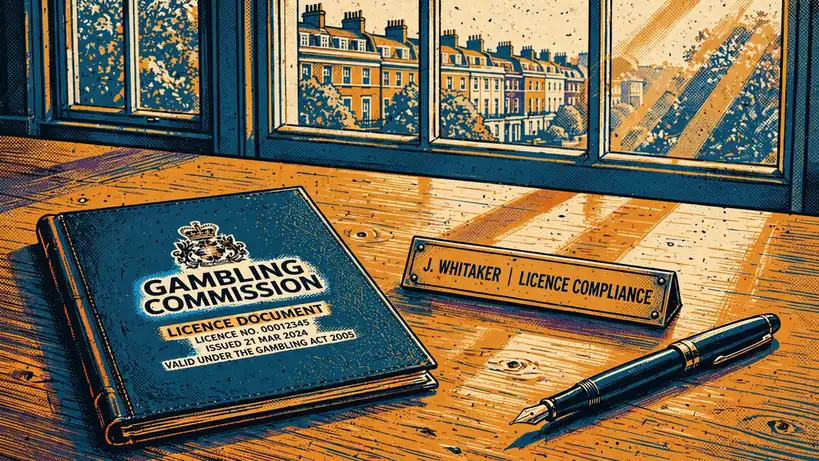
- What a UK Casino Licence Actually Tells You
- Where the Rules Apply—and What Happens When Operators Fail
- “Most Trusted” Is a Claim, Not a Ranking
- Real-Money Play: Check the Bonus Before You Deposit
- Casino Apps Don’t Skip the Checks
- Read Casino Reviews Against the Register
- How I Check a Casino Before Trusting It
- Payments, Games and the Small Print That Changes Them
- Free Spins Have an Expiry Date
- Fast Payouts: Allow for the First Withdrawal
A practical way to assess UK-facing casino claims, from licensing and bonus terms to apps, payments and first withdrawals.
What a UK Casino Licence Actually Tells You
When I see a casino described as “trusted”, I do not start with the welcome banner, the number of games or a polished mobile design. I start with the licence. That sounds less exciting, but it is the first check that separates a real UK-facing gambling operator from a website making its own claims.
For a casino serving customers in Great Britain, the relevant authorisation comes from the UK Gambling Commission. This applies even when the company behind the website is based somewhere else. Location is not a shortcut around the requirement: if a remote gambling business offers facilities to people in Great Britain, it needs the appropriate UK Gambling Commission licence.
That gives the licence its basic importance. It is not a decorative badge. It is the regulator’s starting point for allowing an operator to provide remote gambling to the market it covers.
What the licence establishes
A current UKGC Licence tells you that the operator has entered the British regulatory system for the activities covered by that licence. For real-money gambling offered to customers in England, Scotland and Wales, a UK Gambling Commission licence is required. That is the essential legal test before I spend time assessing anything else about a casino.
It also gives you a fixed point for checking the business behind the brand. Casino names can be memorable, while the legal operator may be much less visible. The licence belongs to the licensed business, not simply to a logo or a domain name. That distinction matters because several brands can present themselves in very different ways while their regulatory identity sits elsewhere.
I have made the mistake of treating a familiar-looking website as evidence enough. It is not. A professional layout can be copied, a reassuring phrase can be written by a marketing team, and a badge can be placed on a page without telling you what it actually relates to. A UKGC Licence is more useful because it connects the operator to a formal regulatory framework rather than leaving the casino to mark its own homework.
USA Casinos for UK Players: Licensing and Payments
That is why licensing is the sensible first filter for anyone looking for a trusted casino in the UK. It can rule out a site that has no place in the UK regulatory system before you get distracted by its promotions or presentation.
What it does not establish
A licence is important, but it is not a certificate saying that every part of your experience will be perfect. It does not mean every withdrawal will feel quick, every support reply will be helpful or every promotion will suit you. It does not turn a casino into a personal recommendation, either.
Nor does the word “licensed” automatically tell you that a particular offer is good value. A casino may be authorised to provide gambling while its bonus conditions remain unattractive to you. The licence and the commercial terms are separate questions. I keep them separate because I have previously seen the word “regulated” do too much work in advertising copy.
Merkur Casino Online UK: What to Check Before Playing
The same applies to trust. A licence supports trust by showing that the operator is subject to the applicable UK regulatory regime. It does not remove the need to read the account terms, understand what you are accepting or decide whether the service fits your own limits. Regulation is a foundation, not a shortcut to blind confidence.
Put more simply, a licence answers: “Is this operator authorised for the relevant British market?” It does not answer every question that follows: “Will I like the terms?”, “How will the account checks feel?” or “Is this offer worth accepting?” Those still need their own answers.
The basic test I use
My first pass is deliberately plain:
- Is the casino offering real-money gambling to customers in England, Scotland or Wales?
- If so, is the operator covered by the relevant UK Gambling Commission licence?
- Does the licence relate to the business providing the service, rather than merely to a brand name used on the page?
If the first answer is yes and the second answer is unclear, I stop there. I do not treat a trusted online casino UK label, a large advertising budget or a stream of positive-looking testimonials as a substitute for the regulatory requirement. The same goes for lists claiming to show the most trusted UK casinos: a ranking can express an opinion, but it cannot create authorisation.
The word “legitimate” is often used loosely in casino marketing. For me, in this context, it must begin with the operator’s legal permission to offer the gambling service. Without that foundation, descriptions such as “safe”, “secure” and “top” are just descriptions. Nice words. Thin evidence.
A UKGC Licence also gives the reader a better basis for judging the rest of the site. Once the operator’s regulatory status is clear, you can look at the terms, account controls and overall service without confusing advertising language with legal permission. That order matters. I used to do it backwards, beginning with the offer and only later wondering who stood behind it. That is how a small headline can become the main decision.
Primary Regulator
UK Gambling Commission
Key Requirement
UKGC Licence for Great Britain
Verification Method
Public Register Check
So, when I assess a trusted UK online casino, licensing is not the finish line and it is not a promise of flawless service. It is the entry test. The operator must have the relevant UK Gambling Commission authority to offer remote real-money gambling to the British customers it serves. Only after that basic point is satisfied does the rest of the casino deserve my attention.
Where the Rules Apply—and What Happens When Operators Fail
“UK casino” sounds like one neat regulatory category. It isn’t quite that simple. The key dividing line is between Great Britain—England, Scotland and Wales—and Northern Ireland.
The Gambling Act 2005 provides the main framework for gambling in Great Britain. The UK Gambling Commission regulates remote gambling offered to people in that part of the country. That is why a casino serving customers in England, Scotland or Wales needs to operate within the UKGC system, even when the company itself is based somewhere else.
Northern Ireland is different. It is not within the UK Gambling Commission’s remit for remote-gambling provision in the same way. So a statement such as “this site is covered by UK rules” needs a little more care than its wording suggests. You need to know which customers the operator is addressing and which regulator, if any, is responsible for that service.
Non-UK Regulated Casinos: Rules for UK Players
That distinction matters when you are comparing trusted casino sites in the UK. A page aimed at British players may use broad language about being “UK-friendly” or “UK-approved”. Those phrases can sound reassuring while avoiding the more useful question: does the operator appear in the relevant public register for the market it is serving?
The register is the practical checkpoint
I treat the public register as the point where a casino’s regulatory claim has to become specific. Marketing pages can use polished wording, badges and broad promises. A register entry connects the business to a regulator and makes the claim easier to test.
The check is not only about the brand name. Casino brands, operating companies and web addresses do not always use identical names. A careful check should therefore compare the details shown by the casino with the information recorded publicly. If the brand, operator or domain does not line up, I would stop before treating a review’s “trusted” label as proof.
This is also why lists of the most trusted casino sites UK players can use should be read as opinions unless each entry has been checked independently. A review can help you find a name worth investigating, but it cannot replace the register. The same applies to pages discussing trusted new casino sites, trusted bonuses or trusted slots: a new design and a generous-looking promotion say nothing by themselves about the operator’s regulatory position.
DO
- Compare the brand name with the legal operator in the register
- Check the domain against the official record
- Verify the operator’s enforcement history
DON’T
- Trust a “trusted” label without independent verification
- Assume familiarity with a site equals safety
- Rely on marketing badges as legal proof
I have made the mistake of accepting a familiar-looking site as safe because several pages described it as established. Familiarity is not verification. The register is less exciting, but it gives you something concrete to compare.
A licence is not a blank cheque
The other check I make is the operator’s enforcement history. This is not because every regulatory action means that a casino is unusable forever. It is because enforcement shows how the regulator responds when an operator falls short, and it gives you a more realistic view than advertising alone.
On 26 June 2025, the Gambling Commission imposed a £60,000 financial penalty on Grace Media. The breaches involved self-exclusion and consent for direct electronic marketing. Those are not cosmetic issues. Self-exclusion is tied to a customer’s attempt to stop gambling, while marketing consent concerns whether promotional messages are being sent appropriately.
The point is not to turn one enforcement notice into a sweeping verdict on every service connected with the business. It is to show why “licensed” and “trusted” should not be treated as identical words. A UKGC Licence places an operator inside the regulator’s framework. An enforcement record tells you that the framework has also been tested in practice.
That difference is easy to miss in a quick review. A page may call a brand one of the best trusted casino sites UK players can find, yet say nothing about regulatory action. Another may describe a casino as a trusted online slot destination while focusing entirely on its games and promotions. I would rather spend a few minutes checking the operator’s current register details and any relevant enforcement information than rely on a string of approving adjectives.
Casino Without a UK Licence: What It Means
Great Britain and Northern Ireland need separate thinking
For customers in England, Scotland and Wales, the UK Gambling Commission is the regulator whose public information is relevant to remote gambling supplied into that market. Northern Ireland does not sit within that UKGC remit in the same way, so a reader there should not assume that a Great Britain-facing regulatory statement answers every question about Northern Irish provision.
That is the awkward bit that broad “trusted UK casino” language tends to flatten. The country label is familiar; the regulatory boundary is more precise.
My own rule is simple: identify where the service is being offered, identify the regulator that covers that territory, then check the operator rather than trusting the brand’s wording. After that, look at enforcement history. It takes longer than clicking a “trusted” badge.
Worth the extra minute.
“Most Trusted” Is a Claim, Not a Ranking
“Most trusted” sounds like a settled result. It is not. In casino advertising, the phrase can mean that a site has a UKGC Licence, that it has been operating for some time, that reviewers liked the customer service, or simply that somebody wants you to click through and register. Those are different things, and they should not be bundled into one impressive-sounding label.
I have made that mistake myself. A page looked confident, the wording was polished, and several operators were presented as if they had finished a formal trust test. What I had actually seen was a recommendation list with no published method for deciding who belonged on it. “Best” was doing the heavy lifting.
"Most trusted" is often a marketing description or an editorial opinion rather than an official regulatory ranking.
What a trust claim can—and cannot—prove
A review or comparison page can tell you what its writer thinks. It may discuss the operator’s ownership, website, support, payments or reputation. That can be useful background, but it does not turn the page into an official ranking. Nor does a prominent badge prove that an operator appears on the UK Gambling Commission’s register.
There is no single public table that awards a verified first place for the most trusted online casino in the UK. A list can be arranged by editorial preference, commercial relationship, popularity, or the order in which brands were added. Unless the method is clear and independently checkable, “top trusted online casino” remains a marketing description rather than a regulatory status.
That applies to mobile casinos and crypto casinos too. A phone-friendly site may be easier to use, while a crypto-focused site may advertise a particular way to fund an account. Neither description answers the more important question of whether the operator is authorised for British customers. The format of the casino is not evidence of trust.
The same caution applies to phrases such as “most trusted casino online UK” and “best trusted casino UK”. They describe an opinion, not a qualification issued by the regulator. I would treat them as an invitation to investigate, not as a result I can safely accept.
Use the register to test the concrete part
The useful question is narrower: can the operator and the domain connected with the offer be matched to a current Gambling Commission record?
Start with the brand name, then check the company name and the website address. Those details need to line up. A familiar brand may use a different legal entity, while a review may mention an old domain or an unrelated company. If the page gives only a logo and a promise of trust, that is not enough information for a proper check.
Gibraltar Casino License in the UK: What It Means
The register is not a league table. It does not tell you which licensed operator offers the nicest website or the quickest support. It records regulatory information that can be checked. That makes it useful for confirming a specific claim, but not for proving that one casino is better than every other casino.
A dated check can also expose how carefully a recommendation has been prepared. For instance, a specialist affiliate review reported that a Gambling Commission register check dated 26 September 2026 did not show a LuckyPays listing under the brand or the stated address, including luckypays.io. That is a precise observation tied to a date—not proof that the position can never change, and not a reason to treat the review’s overall ranking as official.
The same distinction matters in another example. A specialist affiliate review described a register search carried out on 25 September 2026 in which neither Usoftgaming N.V. nor Hustles Casino appeared as a Gambling Commission operating-licence entry. Again, the sensible reading is limited: the named entities were not found in that dated check. It does not create a universal ranking, and it does not replace checking the live register yourself.
A practical way to read “trusted”
When a page calls an operator trusted, separate the statement into parts:
- Opinion: the writer prefers or recommends the casino.
- Commercial claim: the page may earn money if you follow its link.
- Regulatory claim: the operator says it holds a UKGC Licence.
- Checkable detail: the company, account information and domain can be matched on the public register.
Only the last category gives you something concrete to verify. The first two may still be useful, but they are not independent proof. The third should be tested rather than repeated.
I do not need a dramatic verdict from a “most trusted online casino UK” list. I need the operator’s identity and the domain it is actually using, then a register entry that matches. If those details do not connect, the confident wording around them becomes background noise.
Trust is not a trophy. It is a claim with paperwork behind it—or it is just a claim.
Real-Money Play: Check the Bonus Before You Deposit
A welcome bonus can make a real-money casino look more generous than it is. I have made that mistake myself: I saw the headline amount, treated it as extra balance, and only read the conditions after depositing. The number at the top was easy to understand. The part underneath was where the value changed.
Understanding Wagering
If a bonus is £20 and the wagering requirement is 10 times, the required total stakes are £200. This is the amount you must put through eligible play before any winnings from the bonus can be withdrawn.
The first thing I now check is wagering. This tells you how much must be staked before bonus funds, or any associated winnings, can be withdrawn. It is not the same as receiving cash with no strings attached.
A simple illustration from a specialist review makes the point. If a bonus is £20 and the wagering requirement is 10 times, the required total stakes are £200. That does not mean you lose exactly £200, because the balance changes as you play. It does mean the offer asks you to put £200 through eligible play before the relevant withdrawal condition is met. A small headline bonus can therefore create a much larger playing commitment.
That is the bit advertising tends to hide.
Read the calculation, not the headline
Wagering can be calculated against the bonus alone, the deposit and bonus together, or another amount defined in the offer rules. Those produce very different results. I would not guess which formula applies from a banner. I would look for the actual definition in the bonus terms.
VPN-Friendly Casinos in the UK: What It Means
The percentage match matters too. A specialist review describes a possible offer where the casino matches a deposit in full, up to £200, while attaching a 30-times rollover. That wording is not a promise that every welcome offer works this way; it is a reminder to inspect the relationship between the advertised match and the required turnover. If the maximum bonus is reached, the larger bonus balance can also mean a larger wagering task.
I also check what counts towards the requirement. The terms may restrict eligible play or set different contribution rules. A bonus that looks attractive on one screen can be much less useful once only certain activity counts. The important question is not simply, “How much do I receive?” It is, “What must I do before I can withdraw?”
Confirm that you qualify
Welcome bonuses are commonly aimed at new customers. A specialist review identifies three conditions worth checking before you deposit: the promotion may be limited to new customers, restricted to one offer per household, and unavailable with some payment methods, including e-wallets.
Those details can turn an apparently suitable offer into one you cannot claim. “New customer” may refer to more than having opened an account recently; the terms may also address previous registration or promotional participation. The household restriction matters if somebody else at your address has already used the deal. And if your chosen deposit route is excluded, making the deposit first may not solve the problem.
Bonus Eligibility
- Confirm if the promotion is limited to new customers
- Check if there is a one-per-household restriction
- Verify if your preferred payment method is excluded
- Identify the specific wagering calculation formula
I prefer to settle eligibility before putting money into the account. Otherwise, you can end up with a deposit that does not trigger the advertised bonus and no easy way to recreate the decision.
Look beyond the bonus balance
The cash portion of a deposit and the promotional portion may not have identical conditions. Check whether the bonus must be activated, whether the offer applies automatically, and whether accepting it changes the rules for withdrawals. Also look for any stated minimum deposit, maximum qualifying amount, or restrictions on how the funds may be used. These are terms to verify on the individual offer, not numbers to assume from another casino.
Do not let the word “trusted” do the checking for you. A trusted welcome bonus is not one with the loudest figure; it is one whose conditions you can understand before committing real money. The same applies when comparing casinos that advertise themselves as established, generous, or suitable for real-money slots. Those descriptions do not tell you how wagering is calculated.
My own rule is simple: I write down the bonus amount, the wagering figure, the calculation base, the eligible play, and the eligibility limits. If I cannot explain the route from deposit to withdrawal in plain English, I leave the offer alone.
Less excitement, fewer surprises.
Casino Apps Don’t Skip the Checks
A casino app can make the whole thing feel lighter than it is. Tap the icon, sign in, and the games are sitting there on a small bright screen. I have made the mistake of treating that smoothness as a sign that the account was ready to use. It is not.
Casino sites not registered with GamStop: UK guide
Using a trusted casino app in the UK does not create a shortcut around account checks. Under UK rules, verification must be completed before you can deposit or play. That applies whether you open the casino in a mobile browser or use its dedicated app.
What happens before play
You may be able to download an app and look around before everything is cleared. That does not mean you can fund the account or start gambling. The important dividing line is access to the interface versus permission to use real money.
In practice, the app may pause you at registration, before the first deposit, or when you try to open a game. It can ask for identity or payment-ownership information before continuing. I prefer that interruption to discovering later that money is sitting in an account I cannot use.
Do not assume that a previously used desktop account avoids the same checks on mobile. The app is another way into the account, not a different set of rules. If the operator needs information from you, changing screen size will not change that requirement.
A quick phone check
Before installing a casino app, I look at the name of the operator shown in the app details and compare it with the website I intended to use. I also avoid rushing through registration just because the layout looks polished. Read what the account setup asks for, and keep access to any requested documents available.
Verification
Attention Do not assume that using a mobile app allows you to bypass identity verification; the same regulatory requirements apply to real-money play on any device.
A genuine mobile experience should not suggest that you can deposit first and sort out verification later. That would clash with the rule applying to real-money play. If an app appears to offer that route, I stop rather than testing it with my own money.
The useful question is not whether an app feels modern. It is whether it handles the same checks before deposit and play. Small screen, same gate.
Read Casino Reviews Against the Register
A casino review can be useful, but I treat it as a lead rather than a verdict. Reviews often gather the details that are awkward to find: who appears to run the site, which domain is being promoted, how the banking page is presented, and whether the welcome offer comes with strings attached. That saves time.
It does not make the review evidence of trust.
I have been caught by polished pages before. “Trusted” can mean the reviewer liked the design, the affiliate relationship pays commission, or the site answered a few questions quickly. None of those points confirms that the operator and website match the records held by the regulator. Read the praise, then check the identity behind it.
Match the operator to the domain
The useful comparison is not just the casino’s brand name. Look at:
- the legal operator named in the review;
- the exact website address you intend to use;
- the operator account number, where one is provided;
- the entry for that domain in the UKGC public register.
A specialist review has reported that the register connected leovegas.co.uk with operator account 39198, while the Gambling Commission entry identified LeoVegas Gaming PLC under that same account. That is the kind of detail worth testing yourself, not repeating because it appears in a review.
Open the register independently and search by both the company and the domain. A brand can have several websites, and a similar-looking address may not be the one recorded for the operator. Check the spelling carefully; a missing word or different ending can change what you are looking at.
Treat confidence as a claim
A review may call a site “safe”, “reliable” or “fully trusted”. I translate those labels into smaller questions. Is the named operator the same one shown in the register? Does the listed domain correspond with the address in the browser? Are the review’s details specific enough for you to check?
If the writer gives no operator name, no domain comparison and no clear basis for the recommendation, the trust language is mostly decoration. I still might use the page to find candidates, but I would not let its star rating make the decision for me.
That extra check is boring. It is also the useful part.
How I Check a Casino Before Trusting It
I used to start with the welcome offer. That was backwards. Now I work through a short check before I put money anywhere.
1. Match the operator to the site
First, I look for the business name behind the casino, not just the brand on the screen. I then check that name and the exact website address against the UK Gambling Commission public register. The licence number matters, but so does the domain: a genuine operator record should connect to the site you are actually using.
I do not treat a polished design, a familiar-looking logo or a “trusted” badge as evidence. Those are presentation. The register is the useful part.
Checking an Operator
- Match the legal business name to the domain on the UKGC register
- Confirm the availability of account controls and self-exclusion tools
- Expect identity verification to be required before depositing or playing
2. See what protection is available
Before depositing, I look for the account controls that should be available at a UK-licensed casino. New customers must be prompted to set a financial limit before their first deposit, and the account should provide accessible limit controls afterwards.
I also check for self-exclusion tools, including GAMSTOP, and find the operator’s complaints procedure. A UKGC licensee must offer an internal complaints process and access to an approved Alternative Dispute Resolution service. I want those links visible before there is a problem, not discovered after one.
If the site makes responsible gambling information difficult to find, I take that as a reason to slow down. Not proof of wrongdoing. A warning sign.
3. Expect identity questions
A casino that lets me deposit without checking my age is not one I would trust with money. UK rules require verification before depositing or playing, so I expect identity or payment-ownership questions rather than treating them as an unexpected obstacle.
The documents can include a photo of a passport or driving licence and a recent utility bill. I keep that in mind before registering, because a withdrawal can be delayed if I have not prepared the necessary paperwork.
Anjouan Casino Licence in the UK: What It Means
For a concrete comparison, LeoVegas states that it may require identity verification at the first withdrawal, with photo identification and proof of address dated within three months. That is the sort of detail I look for in the operator’s own conditions: clear, specific and easy to find.
My final test is simple: if I cannot identify the operator, locate the protections or understand the checks, I stop. No deposit.
Recommended online casinos
- Revery PlayBonus: 100% up to€1,000+ 100 FS · Payout speed: 1-3 business days
- x3betBonus: Welcome Pack 100% Up to £1.000 + 200 Free Spins · Payout speed: 1-3 business days
- BritsinoBonus: Welcome Package – Get your £2,200 + 2,000 FS · Payout speed: 1-3 business days
- SlotoSportBonus: 500% up to £ 10 200+ 777 FS · Payout speed: 1-3 business days
- NightLuckBonus: Welcome Pack + 805% Up To 6400€ + 280 FS · Payout speed: 1-3 business days
- AmunbetBonus: Join now and get 450% up to 2,700 GBP + 450 FS · Payout speed: 1-3 business days
- EvoSpinBonus: 125% up to €2500 + 125 Free Spins · Payout speed: 1-3 business days
- BeOnBetBonus: 100% up to €500 + 100 FS · Payout speed: 1-3 business days
- DieselwinBonus: Welcome Pack 250% up to £4000 + 200 FS · Payout speed: 1-3 business days
- ZombillionBonus: Welcome Pack 250% up to £4000 + 200 FS · Payout speed: 1-3 business days
Payments, Games and the Small Print That Changes Them
I used to treat the payment page as a formality: choose a route, request the money, wait. That was before I noticed how much of the delay sits between the casino approving a withdrawal and the funds reaching my account. The two stages are separate, and the wording matters.
A specialist review reports that debit-card withdrawals can take two to three banking days once the operator has completed its review. That is not the same as receiving the money two or three days after clicking “withdraw”. Any internal checks come first, and weekends or bank processing may affect when the funds appear. Read the cashier’s timing as a sequence, not as one guaranteed countdown.
Withdrawal Timing
Internal reviews and bank processing can take several days after approval.
Transaction Fees
Check both the casino’s terms and your bank’s tariff for potential charges.
Game Contributions
Different games (like slots vs. blackjack) contribute differently to wagering requirements.
Charges deserve the same attention. A bank transfer may involve a fee of £2–£5, depending on your bank’s policy. The operator’s page may not be the only place that matters, so I check both the casino’s terms and my bank’s tariff before moving a meaningful balance. A small charge is still a charge, especially when it appears only at the point of withdrawal.
The bonus section creates another trap. Wagering is not simply a condition attached to the money; the activity you choose can determine how quickly your stakes count towards it. A specialist review states that slot play is generally credited in full for wagering purposes. Live-table play and blackjack, however, can receive a reduced contribution or none at all. In practice, a bonus that looks generous may be much less useful if the play you prefer contributes little to the requirement.
I now look for three separate lines in the small print:
- the time the operator needs to approve a withdrawal;
- any charge applied by the casino, bank or payment route;
- the contribution assigned to each type of game.
That last line is easy to skip because the headline offer is more visible. It should be read first. If a game contributes nothing, stakes placed there will not move the bonus requirement forward, however much you spend. That is where “flexible” can mean very little.
Free Spins Have an Expiry Date
A “free” spin is not necessarily available whenever you feel like using it. Promotional spins and bonus funds can have a fixed expiry period, after which the offer or any unused promotional value may disappear. A specialist casino review reports that these periods commonly run from 7 to 30 days, but the exact deadline belongs to the individual promotion.
That clock matters more than the headline value. If you accept an offer and then leave it untouched, you may lose it simply by waiting. I have made that mistake myself: the promotion looked useful, but I did not check the date before accepting it. By the time I returned, the offer was no longer available.
Before claiming free spins at a trusted UK casino, look for the expiry wording in the promotion’s terms. Check whether the deadline applies to the spins, the resulting bonus funds, or both. Those are not necessarily the same thing. Also note when the period begins. The terms may tie it to acceptance of the offer rather than the moment you first use the spins.
Reliable and trusted online casinos in the UK should make these conditions available before you commit to the promotion. Do not rely on a banner, a message in your account, or the word “wager-free” alone. The expiry rule still needs reading.
I now check four details before accepting:
- the exact date or period allowed;
- which promotional balance the deadline affects;
- when the countdown starts;
- what happens to unused spins or funds when it ends.
If the terms are difficult to find, unclear, or separated from the offer, I leave the promotion unclaimed until I understand the timing. A smaller offer you can actually use is worth more than a larger one that expires unnoticed.
Fast Payouts: Allow for the First Withdrawal
A fast payout is not necessarily a fast first payout. When you request your first withdrawal, the casino may still need to complete identity or payment-ownership questions before releasing the money. That extra stage is easy to miss when an advert talks only about “instant” withdrawals.
A specialist review puts the additional document-check period for first-time withdrawals at 12–24 hours. Treat that as a realistic allowance rather than a promise. If the casino asks for a passport or driving licence photo and a recent utility bill, the clock may not properly start until you send clear, acceptable documents. Blurry images or a missing page can add more waiting.
The payment route matters after the operator has approved the withdrawal. A specialist review reports that PayPal withdrawals clear in roughly 4–6 hours on weekdays, while the timing stretches to 8–10 hours from Friday to Sunday. That is a useful distinction: the casino’s review and the payment service’s transfer are separate parts of the process.
I would therefore check three things before calling any casino a trusted online casino for UK players:
- whether the first withdrawal triggers identity checks;
- what documents are accepted and where they must be uploaded;
- whether the advertised timing starts after approval rather than at the moment you click “withdraw”.
PayPal can look quick once the account has passed review, but a delayed first check still comes first. “Fast payouts” needs that small print attached.
If you are comparing trusted online casinos with fast payouts in the UK, compare the complete route, not just the headline. A familiar payment button does not remove the operator’s checks, and the quickest quoted window may apply only on working days. My own rule is simple: submit documents early, read the withdrawal wording before depositing, and leave room for the first request to take longer. That prevents a routine check from feeling like a missing payment.