
 Available in GB
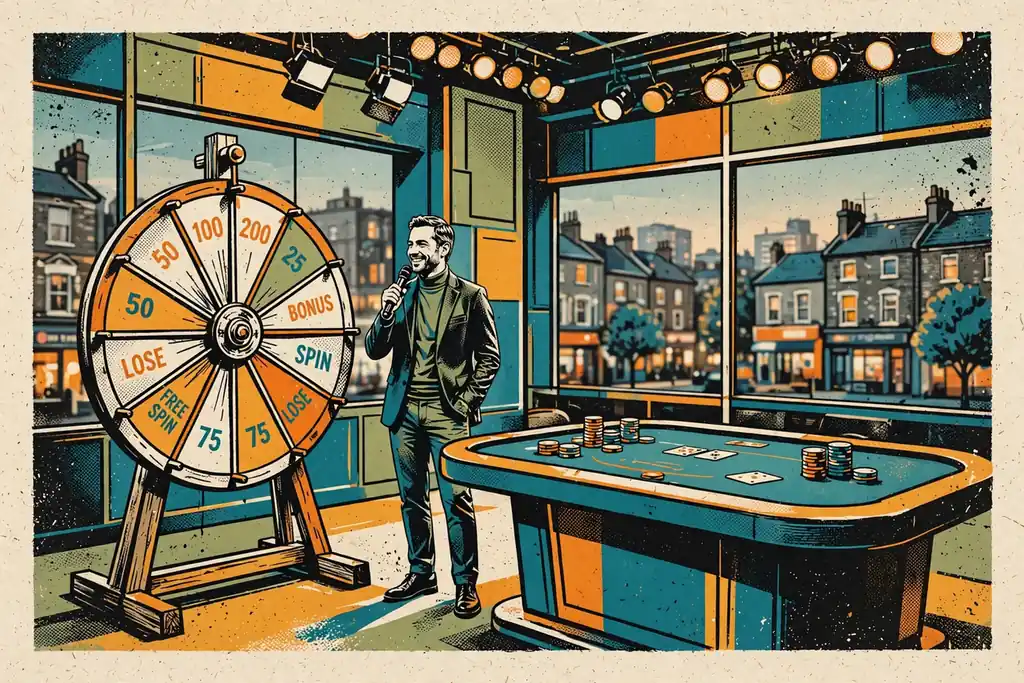
- Dream Catcher Online: Start With the Live-Casino Context
- What to Know Before You Open Dream Catcher
- Choosing a Dream Catcher Casino Without Trusting the Hype
- What “Dream Catcher Casinos” Actually Tells You
- Playing the Game—and the UK Slot-Stake Rules You Shouldn’t Mix Up
- The Dream Catcher Wheel: Don’t Fill in the Blanks
- Checking a Dream Catcher Casino Site Before You Deposit
- Dream Catcher Demo: What You Can—and Can’t—Verify
- A Dream Catcher Casino Review Without Made-Up Scores
- Before You Play Dream Catcher Live
A guide to Dream Catcher’s live format, casino-site checks and the distinction between the game and UK slot-stake rules.
Dream Catcher Online: Start With the Live-Casino Context
Dream Catcher sits in a part of online gambling that looks different from the usual casino lobby. Instead of scrolling through rows of digital reels, you are generally looking for a live presentation: a studio, a host or dealer, and a game shown as it happens. That is the context worth understanding before you start comparing places to play.
I used to treat “live casino” as a single category, as if every title worked in the same way. It does not. The label can cover several types of table and studio products, with different formats, interfaces and expectations. A live wheel-style game belongs to the same broad entertainment area as live roulette or blackjack, but that does not make the games interchangeable.
The UK live-casino market has been around for years rather than appearing overnight. Grosvenor unveiled its live casino offering in 2013, with a selection that included Blackjack, Texas Hold’em and Roulette. That launch is useful context because it shows how the format developed: operators were bringing familiar casino tables into an online setting, with the action delivered from a live environment instead of generated entirely on the player’s device.
That distinction matters when you see a page describing an online casino with Dream Catcher. The casino may have a wider live section containing several kinds of game, rather than being built around one title. You might encounter classic table games, poker variants, roulette products and other studio-led formats alongside the game you came to find. The surrounding lobby is part of the experience, even if your interest is narrow.
The wider live-casino menu
The most recognisable live products are usually based on established casino games. Blackjack is built around cards and decisions at the table. Roulette revolves around a numbered wheel and an outcome selected during each round. Texas Hold’em is a poker format rather than a conventional house-banked table game. These names can appear beside newer or more heavily produced live titles, but they should not be treated as identical simply because they share a studio setting.
Casino Games UK: Slots, Live Tables and Game Shows
There are also branded products such as Lightning Roulette, Infinite Blackjack and Crazy Time. Their names may suggest a particular style, but the name alone does not tell you whether a given operator offers them, how the table is presented, or what conditions apply. A lobby can contain a mixture of standard tables and branded experiences. I have learned not to read a product name as a complete description.
The same caution applies when a site advertises “the best online casino with Dream Catcher”. That phrase can sound like a recommendation, but it says nothing on its own about the wider catalogue, the quality of the interface, the available payment arrangements or the operator’s suitability for a UK customer. Those are separate questions. A prominent game tile is not a full assessment.
Live presentation is not a promise
A live label may make a casino feel more transparent because you can see a studio or table, but presentation and verification are different things. The screen can show a host dealing cards, spinning a wheel or introducing a round; that does not by itself establish who operates the site or whether the particular product is available to you.
Online Casino Tournaments UK: Licences and Rules
This is where I made an early mistake. I saw a familiar game name on a promotional page and assumed I could open an account, find the same title and play immediately. Sometimes the page was about a general casino category, not a confirmed listing. Sometimes the wording described a product without making clear which operator supplied it. “Live” sounded like the useful part. It was not.
For a UK player, the sensible starting point is therefore the live-casino setting rather than a promise attached to the title. Think of Dream Catcher as one possible product within a broader online casino environment. Around it may be card games, roulette, poker and other live formats, but each listing still needs to be treated as its own claim.
That broader view also helps separate entertainment preference from operator choice. You may like the atmosphere of a studio table, prefer the pace of a wheel-based product, or simply want to see which live games are displayed. None of those preferences identifies a suitable casino by itself. The game and the operator are related, but they are not the same thing.
The UK live-casino market features established products like Blackjack, Roulette, and Texas Hold’em, alongside branded studio experiences such as Lightning Roulette and Crazy Time.
What the UK context adds
Online casinos serving Great Britain operate within a regulated market, and live casino is part of that wider online gambling landscape. The Gambling Commission regulates online gambling offered to consumers in Great Britain, including activity delivered remotely even when the equipment involved is located elsewhere. That makes the operator’s status relevant before you focus on the lobby or the studio graphics.
I keep that check separate from the game itself. A title can be recognisable, widely discussed and presented in a polished interface, while the site displaying it still deserves independent attention. The reverse is also true: a properly presented casino may offer many live games, but that does not confirm that Dream Catcher is among them.
So, when you are looking for a place to play Dream Catcher online, start by understanding the neighbourhood. Live casino includes traditional card tables, roulette, poker formats and newer branded products. Grosvenor’s 2013 launch illustrates how established that model is in the UK market. The particular game, the particular operator and the terms attached to play remain separate matters. Keep them separate.
Mines casino game in the UK: what to know
Recommended online casinos
- Revery PlayBonus: 100% up to€1,000+ 100 FS · Payout speed: 1-3 business days
- x3betBonus: Welcome Pack 100% Up to £1.000 + 200 Free Spins · Payout speed: 1-3 business days
- BritsinoBonus: Welcome Package – Get your £2,200 + 2,000 FS · Payout speed: 1-3 business days
- SlotoSportBonus: 500% up to £ 10 200+ 777 FS · Payout speed: 1-3 business days
- NightLuckBonus: Welcome Pack + 805% Up To 6400€ + 280 FS · Payout speed: 1-3 business days
- AmunbetBonus: Join now and get 450% up to 2,700 GBP + 450 FS · Payout speed: 1-3 business days
- EvoSpinBonus: 125% up to €2500 + 125 Free Spins · Payout speed: 1-3 business days
- BeOnBetBonus: 100% up to €500 + 100 FS · Payout speed: 1-3 business days
- DieselwinBonus: Welcome Pack 250% up to £4000 + 200 FS · Payout speed: 1-3 business days
- ZombillionBonus: Welcome Pack 250% up to £4000 + 200 FS · Payout speed: 1-3 business days
What to Know Before You Open Dream Catcher
The name Dream Catcher sounds more specific than it really is. It points to a casino product, not to one particular website, company or welcome offer. That distinction saved me from a fair bit of wasted time. I once saw a familiar game name in a banner, assumed the casino behind it would have the same availability and terms I had seen elsewhere, and clicked through too quickly. The name was recognisable. The details were not.
That is the useful starting point for anyone looking at a live Dream Catcher casino in the UK. Treat the game title as the subject of your search, then examine the operator separately. A page can use the name in its heading, advertising or navigation without that alone telling you what you can actually do there. It does not establish the casino’s licence, the conditions attached to an account, the payment methods, or whether the product is available to you at the point you sign in.
The name and the casino are different things
“Dream Catcher casino” is an easy phrase to understand, but it can blur two separate questions:
- What is the product being discussed?
- Which operator, if any, is offering it to a UK customer?
Those questions should not be answered with the same assumption. A live casino page may mention Dream Catcher alongside other products, while a general casino homepage may use the name in promotional material without making its availability clear. The operator controls the account, deposits, withdrawals, verification checks and terms. The product name does not.
That matters even more when a page calls itself a “live Dream Catcher casino”. The word “live” describes the kind of casino experience being presented, but it is not proof that the particular page is active, accessible or suitable for a British player. I have learned to slow down at exactly this point. Marketing language is often designed to make the click feel like the final step. It is only the first one.
What a UK player should keep separate
There are three layers here.
First comes the game name. It tells you what product you are looking for.
Second comes the operator. This is the business asking you to create an account, provide personal details and fund it. Its rules matter independently of the game title.
DO
- Check the operator’s licence on the Gambling Commission register
- Verify the age and identity requirements
- Set financial limits before your first deposit
DON’T
- Assume a game title guarantees a specific operator
- Trust promotional labels like “the best” without checking terms
- Use credit cards for gambling
Third comes the UK regulatory position. Online gambling is legal in Great Britain at licensed and regulated sites, and an operator serving British consumers remotely must hold the relevant Gambling Commission licence. The UK Gambling Commission regulates commercial gambling in Great Britain and issues operating licences to businesses, as well as personal licences to individuals working in the sector.
So, seeing the right game name on a page does not replace checking who is responsible for the account. Nor does a polished design, a familiar logo or a confident claim about being “trusted” do that job. I have been impressed by a site’s presentation before and found that presentation told me nothing useful about the legal status of the account. Pretty colours are not evidence.
The same applies to offers. A bonus displayed beside a game name belongs to the operator’s terms, not to Dream Catcher itself. It may be subject to eligibility conditions, payment restrictions, identity checks or other requirements. Do not read a promotional label as a feature of the game.
Before you treat the page as an invitation
A sensible first look is boring, which is precisely why it works. Check that the page identifies the operator clearly. Look for its licensing information and make sure the licence can be checked through the public Gambling Commission register. The relevant question is not whether the site says “UK casino”; it is whether the business is authorised to provide remote gambling to consumers in Great Britain.
You should also expect age verification before depositing funds. In the UK, online gambling is for adults aged eighteen and over where the operator holds the necessary UK Gambling Commission licence. If a page seems keen to get money from you while treating age and identity checks as an inconvenience, that is not a detail to brush aside.
Live Baccarat in UK Online Casinos: What to Check
Account controls matter before the first wager too. Remote operators must prompt new customers to set a financial limit before their first deposit and provide accessible account-level limit controls. UK-licensed casinos must also provide responsible-gambling tools, including self-exclusion. These are account safeguards, not special properties of Dream Catcher, and they should be considered before you put money into any live casino account.
Payment wording deserves a plain reading. UK-licensed casinos cannot accept credit cards for gambling, including arrangements that disguise credit-card funding through a money service business or a wallet that permits credit-card funds to be used for gambling. If a payment route sounds deliberately complicated, I would not try to decode it with money already in the account.
Keep expectations modest
A product name cannot tell you whether a particular operator offers the exact experience you expect. It cannot tell you that the page is available in your location, that an account can be opened, or that an advertised offer applies to you. Those are separate matters, and they change from one operator to another.
That does not make the search pointless. It simply means the sensible order is product first, operator second, account conditions third. I find that order less exciting than clicking a bright “play now” button, but it is much less likely to turn a familiar name into an expensive assumption.
If you decide to continue, use only money you can afford to lose. Casino play is entertainment with a financial risk attached, not a way to repair a bad month. Keep that boundary in place before the page, rather than trying to recover it afterwards.
Main Conclusions
- Treat the game name as the subject of your search, but examine the operator separately
- Always verify the operator’s UK Gambling Commission licence status
- Separate entertainment preferences from operator suitability
- Use only money you can afford to lose
Choosing a Dream Catcher Casino Without Trusting the Hype
“Best” is one of those casino words I no longer trust on sight. It often means a page has been given a flattering label, not that anyone has compared the operator properly. I have made that mistake myself: I saw a familiar game name, a loud welcome message and a page promising the best live Dream Catcher casino, then treated the whole thing as if it had already passed a background check.
It had not.
For a UK player, the first question is not which casino looks most polished. It is whether the operator is allowed to serve you at all. Remote operators serving consumers in Great Britain must hold the relevant Gambling Commission licence. That is a basic condition, not a badge for a marketing page to wave at you. If the operator cannot clearly connect its business to the required UK regulatory status, I would stop there rather than trying to talk myself into it.
Start with the operator, not the game
Dream Catcher may be the reason you opened the page, but it should not decide where you create an account. A game title can appear in promotional material without telling you enough about the company behind the offer. The operator controls the account, deposits, withdrawals, identity checks, complaints process and the way its gambling tools work.
My own rough test is simple:
- Is the business clearly identified?
- Does it explain which licence covers its Great Britain service?
- Are the terms written for the actual operator, rather than copied-looking general text?
- Can you find practical information about account restrictions, complaints and responsible gambling?
- Does the site make you feel pushed to deposit before you have read anything important?
None of those points proves that a casino is good. They do, however, separate an operator that can be examined from a page built mainly to create urgency.
A site may call itself a “top choice”, but that phrase has no regulatory meaning. Nor does “trusted”, “exclusive” or “the best live casino experience”. I treat those as advertising until the operator provides something concrete behind them. Better branding is not better protection.
Check what the account experience involves
A suitable operator should explain its customer checks before money becomes involved. Licensed operators must verify a customer’s age before allowing a deposit into a gambling account. That matters because a smooth sign-up process is not automatically a good sign. If the site seems unusually casual about age or identity, I would regard that as a warning rather than a convenience.
I also look for control features before depositing. Remote operators must prompt new customers to set a financial limit before the first deposit and provide account-level limit controls that are accessible. UK-licensed casinos must also provide responsible gambling tools, including self-exclusion. These are not decorative links at the bottom of a page. They are part of the practical relationship between you and the operator.
I prefer seeing those controls explained in plain English. If the site hides them behind vague wording, makes them difficult to locate or frames every restriction as an obstacle to “better play”, the sales pitch is telling you more than the help section is.
Payment information deserves the same attention. UK-licensed casinos cannot accept credit cards for gambling, and operators cannot accept wallet payments where credit-card funds can be used for gambling. A payment page that leaves this unclear is not one I would trust with an account, however attractive the game selection appears.
Before You Wager
- Confirm the operator is licensed by the UK Gambling Commission
- Verify the site’s age and identity verification process
- Locate and set your account-level financial limits
- Check that payment methods do not involve credit cards
- Read the specific game rules and settlement details
Look beyond the welcome message
A sensible comparison also includes what happens when things go wrong. UKGC licensees must offer an internal complaints process and access to an approved Alternative Dispute Resolution service. I would want to know where those details are before I wager, not after a withdrawal or account disagreement has become stressful.
The same applies to the operator’s wording around withdrawals, verification and account closure. I am not looking for a promise that everything will be instant or effortless; those promises are usually the least useful part of the page. I want terms I can understand, with enough detail to know what the operator expects from me and what I can do if there is a dispute.
That is why I would not produce a ranked list of the “best Dream Catcher casinos UK” from names and slogans alone. A ranking implies that the operators have been checked against the same evidence. Without that evidence, it is just a neat-looking opinion dressed up as guidance.
A better way to compare
Put the operator first, then consider whether its presentation of Dream Catcher is clear and consistent with the account terms. Do not let a familiar game title make you overlook licensing, age checks, financial controls, payment restrictions or complaints access. Those details are less exciting than a banner promising the best live Dream Catcher casino, but they matter when the advertising stops.
Online American Roulette Casinos in the UK: Licence Checks
My conclusion is not that one named casino automatically deserves your money. It is that a credible choice should survive basic questions before you register. If it cannot, the “best” label is doing all the work.
What “Dream Catcher Casinos” Actually Tells You
The phrase “Dream Catcher casinos” sounds more definite than it is. It can give the impression that there is a recognised group of casinos offering the same game, perhaps with a clear choice of places to play. That impression is not evidence. It is only a description of what someone hopes to find.
I have made this mistake myself. I saw a casino name placed beside a game name and treated the pairing as confirmation that the game was available there. It was not confirmation. A page can mention Dream Catcher in a title, comparison table, advert or old article without showing that the operator currently provides access to it.
The same applies when the wording includes “live”. That tells you the intended type of experience, not which company supplies it, whether the table is open to players, or whether the operator accepts customers from Great Britain. “Live Dream Catcher casinos” is a useful subject label, but it is not a directory.
Attention A game title appearing in promotional material is not proof that the operator currently provides access to it in your location.
A name beside a game is not proof
A casino may use Dream Catcher as part of its promotional wording while the actual game catalogue says something different. It may be unavailable in a particular country, restricted to certain account types, removed after a catalogue change, or mentioned only in editorial material. None of those possibilities can be settled by the phrase alone.
Nor does “Dream Catcher casinos UK” establish that a site is suitable for a player in England, Scotland or Wales. UK availability involves more than seeing a familiar game name. The operator must be permitted to provide remote gambling to consumers in Great Britain, and the individual site’s current position matters. A location word attached to a product name does not create that permission.
This is why I separate three ideas that are often bundled together:
- a casino is associated with the Dream Catcher name;
- the game is actually available to that casino’s customers;
- the operator is suitable for a player in Great Britain.
The first may be a claim on a page. The second needs direct confirmation from the operator’s current offering. The third concerns the operator’s legal and practical status, not the game’s branding. They are different checks.
What the wording cannot tell you
It cannot tell you the game’s rules, betting mechanics, table availability, or whether any advertised feature remains active. It also cannot tell you that a named casino is licensed for British customers. Those details should never be filled in because the wording feels familiar.
That may sound overly cautious for a simple casino-game name. I do not think it is. Gambling pages are good at making an association look like a fact. A product name, a country label and the word “live” can sit together neatly while leaving the important question unanswered: what, exactly, is being offered, and by whom?
So treat the phrase as a starting point, not a recommendation or a list. It identifies the subject. Nothing more.
Playing the Game—and the UK Slot-Stake Rules You Shouldn’t Mix Up
Dream Catcher is often described as a live casino game, and that is the sensible starting point when you are trying to understand what you would be playing. The name alone does not tell you how a particular table works, what choices are available, or how a wager is settled. Those are details to read on the operator’s game screen before putting money down.
Online European Roulette Casinos in the UK
I have made the mistake of treating a familiar game name as a complete explanation. It is not. A casino may display the title prominently while placing the important information behind an information button, in the rules panel, or alongside the wager controls. Before you play, check the stated rules, the available wager options, the way results are shown, and whether the game is actually live rather than merely using live-casino-style branding.
That matters when you want to play Dream Catcher for real money. You should know what action confirms a wager, when the game cycle closes, and where the outcome is displayed. If the wording is vague, or the page sends you straight to a deposit without explaining the game, I would stop there. “Simple” is often advertising language for “we have not explained much.”
The UK stake rules create another possible source of confusion. They concern online slots, not every product placed in a casino’s games lobby. A specialist affiliate review reports that, in Great Britain, the maximum stake for an online slot game cycle is £5 for an adult aged 25 or over, while an adult aged 18 to 24 is limited to £2 per cycle. These age bands matter, so do not assume that one figure applies to everyone.
The same type of review also states that those slot limits do not cover roulette or blackjack. That distinction is important here. Dream Catcher should not automatically be treated as a slot simply because it appears online, uses a game-cycle format, or sits beside slot titles. Nor should it automatically be treated as roulette or blackjack. Its category needs to be established by the relevant game and operator information, rather than guessed from the name.
UK Slot Stake Limits
In Great Britain, the maximum stake for an online slot game cycle is £5 for adults aged 25 or over, and £2 for adults aged 18 to 24. Note that these specific limits do not cover roulette or blackjack.
So, when you are looking at a live Dream Catcher casino game, keep two checks separate. First, understand the game’s own instructions and the wager process. Second, identify which UK rules apply to that product. Mixing those jobs can lead to the wrong assumption about a permitted stake.
The practical habit is unglamorous: read before wagering, especially where the game description is brief. If the presentation does not make the product or its terms clear, leave the balance untouched. However attractive the table looks, only gamble what you can afford to lose.
The Dream Catcher Wheel: Don’t Fill in the Blanks
The wheel is the part people want to understand first. Fair enough: the name “Dream Catcher” makes it sound as though the whole game can be read from one clear diagram. I have made that assumption myself, then discovered that a familiar-looking title tells me far less than I thought.
A wheel image, a game title or a short description is not enough to establish how a particular version operates. It does not, by itself, confirm the wheel’s sections, the available outcomes, the way wagers are placed, or how a result is settled. Those details belong to the game information shown by the operator or provider. Read that material before putting money down, rather than filling the gaps from a video, advert or someone’s confident comment.
That matters because “live casino wheel” is a broad description, not a complete set of rules. A page may use the word “wheel” while giving you only a promotional picture. Another may present a game title without making the betting interface or settlement details obvious until you open it. I now treat the title as an invitation to inspect the rules, not as a shortcut to knowing them.
What to check around the wheel
Before you wager, look for the rules or help panel attached to the actual game. Check that it explains:
- what selections are available;
- how a wager is placed and confirmed;
- when wagering closes;
- how the result is determined;
- how winning wagers are settled;
- what happens if the connection fails or a round is interrupted.
I am deliberately not turning those headings into a made-up wheel diagram. The useful question is not whether a description sounds familiar; it is whether the operator gives you enough information to understand the specific game in front of you.
The same caution applies to claims about a “live Dream Catcher wheel”. The live label may describe the presentation, but it is not proof of a particular layout, outcome set or payment arrangement. Check the page you are actually using, including any rules opened from the game window. If the explanation is vague, hard to find or inconsistent with the betting screen, I would leave it alone.
And keep the basic money rule in sight: only wager what you can afford to lose. A bright wheel and a live presentation can make a round feel more important than it is. It is still your money.
Checking a Dream Catcher Casino Site Before You Deposit
A polished live-casino page tells you very little about the company behind it. Before depositing, I check the operator rather than trusting the game title, studio branding or a row of payment logos.
Licence Verification
Step 1: Identify the operator
Find the legal company name and licence number on the casino’s website.
Step 2: Use the official register
Open the UK Gambling Commission’s public register directly instead of using links on the casino site.
Step 3: Compare details
Search for the business name and ensure the entry covers remote gambling for consumers in Great Britain.
For customers in Great Britain, the essential question is whether the company holds the relevant operating licence from the UK Gambling Commission. Remote gambling is covered even when the operator’s key equipment is located elsewhere. The Commission is the sole regulator for commercial gambling in Great Britain, and it oversees online casinos as part of that work.
The check is straightforward:
- Find the operator’s legal company name and licence number on its website. Do not settle for a logo saying “licensed”.
- Open the UK Gambling Commission’s public register directly, rather than following a badge or link supplied by the casino.
- Search for the legal business name and compare the result with the brand, domain and trading details shown on the site.
- Make sure the entry covers remote gambling and appears relevant to customers in Great Britain.
- Stop if the details do not match. A familiar brand name is not proof that the particular website is authorised.
The register distinguishes operating licences issued to businesses from personal licences held by individuals working in the industry. For a player, the business entry is the important starting point. I would also check that the licence is current before adding money; an old screenshot or copied certificate proves nothing.
There is a specific caution around LuckyPays. A public-register check dated 26 September 2026 did not identify a LuckyPays entry under the brand or the stated domain, including luckypays.io. That observation applies to the names and domain checked; it does not establish anything about other operators or websites. Treat it as a reason to verify carefully, not as evidence about every casino carrying Dream Catcher.
Finally, do not let the licence check become a substitute for judgement. If you cannot establish who runs the site and which licence covers it, keep your money out. And whatever the site says about live play, wager only what you can afford to lose.
Dream Catcher Demo: What You Can—and Can’t—Verify
A request for a Dream Catcher demo sounds simple: see the game first, then decide whether it deserves any real-money attention. I understand that instinct. I have clicked through plenty of “free” labels that turned out to be little more than a promotional doorway.
Casino Dice Games in the UK: How Online Play Works
The word demo does not, by itself, confirm that a playable version is available. It does not establish whether the page is current, who operates it, or whether the presentation matches the product offered for money. The same applies to a page describing a live Dream Catcher demonstration. A title, image, video or button may create interest, but none of those details proves that the game can be opened and used without a wager.
I would also avoid treating a demo as evidence about an operator’s wider service. It cannot, on its own, show that the casino accepts customers in Great Britain, holds the necessary permission, or provides the account controls and complaints routes expected from a licensed operator. Those are separate checks.
Before entering payment details, I would identify the business behind the page and check its licence number on the UK Gambling Commission’s public register. Remote gambling offered to consumers in Great Britain requires the relevant Gambling Commission licence, regardless of where the operator or its equipment is based. If the page does not make the operator clear, or the licence information cannot be matched, I would stop there. No spinning wheel is worth guessing who is responsible for the account.
A demo, where one is genuinely provided, should be treated as a way to inspect the presentation—not as proof of future results, value or suitability. I would not infer rules, outcomes or betting mechanics from a promotional clip. Those details need to be stated by the operator or game provider in material you can actually check.
Final Advice
A demo is a way to inspect presentation, not proof of future results or operator suitability.
And if you move from looking to wagering, keep the boundary clear: use only an operator you have verified, and gamble only what you can afford to lose. A “free” label changes nothing about that decision.
A Dream Catcher Casino Review Without Made-Up Scores
A useful Dream Catcher casino review should help you decide what has actually been checked, not decorate a page with stars and confident adjectives. I have read plenty of “expert” reviews that scored a casino before showing who runs it, which licence covers it, or whether the advertised game is even available. That is backwards.
I would split the review into two separate questions. First: what can be established about Dream Catcher as a product? The review should identify the game correctly and avoid quietly filling gaps with invented wheel layouts, payouts, betting options or live-table features. If a detail has not been confirmed, it should be labelled as unconfirmed rather than presented as part of the experience.
Second: what can be established about the casino offering it? That means naming the operator, checking its current UK Gambling Commission position on the public register, and confirming that the site’s terms apply to customers in Great Britain. A review should also make clear who is responsible for the gambling service. A familiar game name does not prove that every website using it is connected to the same provider or offers the same conditions.
I also look for evidence behind practical claims. If a review mentions deposits, withdrawals, identity checks, complaints, self-exclusion or financial-limit tools, those points should come from the operator’s published information or from a clearly described test. “Fast payments” is not evidence; it is an advertising phrase wearing a tie.
The same goes for ratings. A score only means something when the criteria are visible and applied consistently. Without that, a neat number creates false precision. My own rule is simple: no rating for game quality, casino reliability or value unless the underlying claim can be checked.
Crazy Time Live Casino Game Show in the UK
A responsible review should finish with the less exciting details: the legal status of the operator, the conditions attached to play and the risks of gambling. You should only wager money you can afford to lose. That warning is not a substitute for evidence, but leaving it out would make the review incomplete.
Before You Play Dream Catcher Live
If you are ready to play Dream Catcher live, pause before opening the cashier. I have rushed that step before, usually because a page made the whole thing sound simpler than it was. A few checks first can prevent an expensive mistake.
Confirm that the operator accepts customers in Great Britain and holds a current UK Gambling Commission operating licence. Do not rely on a badge, a logo, or a sentence saying “fully licensed”. Find the licence number and check it against the Commission’s public register. The regulator covers remote gambling offered to Great Britain consumers, wherever the operator’s key equipment is located.
Check the account conditions as well. The operator must verify your age before allowing you to deposit, and online gambling is for adults aged 18 and over. A UK-licensed casino should also provide account controls and responsible-gambling tools, including self-exclusion. Set a financial limit before depositing if the site prompts you to do so; treat that limit as a boundary, not an invitation to raise it later.
Use a payment method you understand, and remember that UK-licensed casinos cannot accept credit cards for gambling. If the site’s ownership, licence information, or terms leave you guessing, leave the page open and investigate rather than depositing out of impatience.
Most importantly, only gamble what you can afford to lose. That is not a slogan I always followed, and ignoring it made ordinary play feel very different afterwards. Keep the stake within your entertainment budget, stop when that budget is gone, and do not chase losses by adding more money.
Then, if everything checks out, you can decide whether playing Dream Catcher live suits you—without letting the advertising make the decision for you.
Are online casino games licensed and regulated?
Yes. The UK Gambling Commission regulates online gambling offered to consumers in Great Britain, and remote operators serving them must hold the relevant licence.
What are the online slot stake limits in Great Britain?
The limit is £5 per game cycle for adults aged 25 and over, and £2 for adults aged 18 to 24. These limits do not apply to roulette or blackjack.
Is LuckyPays licensed by the UK Gambling Commission?
No LuckyPays entry, including under luckypays.io, appears on the Commission’s public register dated 26 September 2026.