
 Available in GB
- Start with the licence, not the branding
- Trust is tested when an operator gets it wrong
- Real-money play means checking the route in and out
- What ‘trustworthy’ should mean before you sign up
- A name on a register is a starting point, not a verdict
- Read casino reviews against the public record
- The checks I’d make before trusting a casino
- Non-GAMSTOP claims need a hard pause
- Bitcoin casino claims: check the UK licence first
- Ethereum casinos still need the same scrutiny
A practical framework for checking UK licensing, operator records and payment routes before deciding whether a casino merits trust.
Start with the licence, not the branding
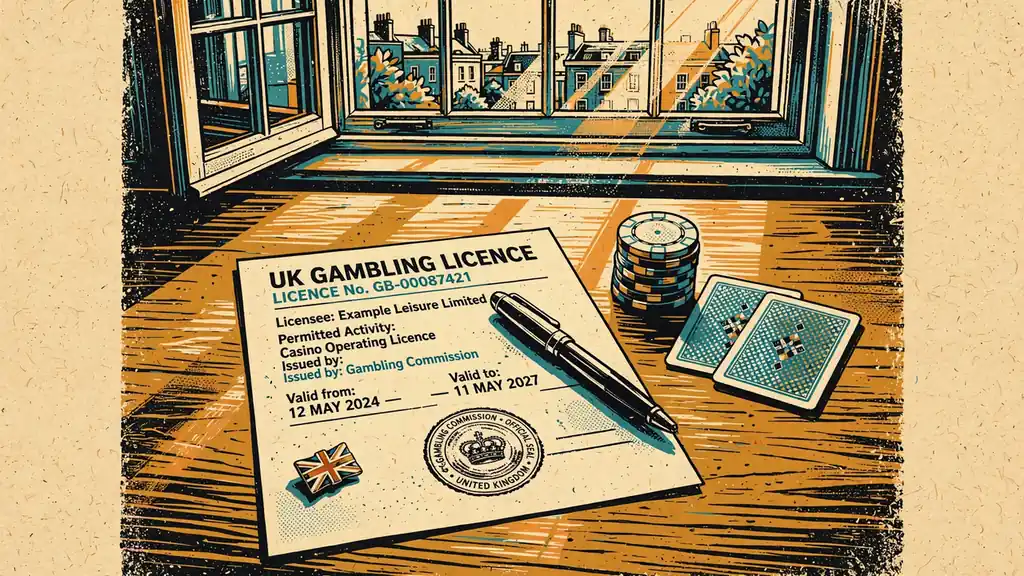
When I am deciding whether an online casino deserves the word “trustworthy”, I do not begin with the logo, the colour scheme or a row of famous game providers. Those things are easy to arrange. A licence is harder to fake, and in Great Britain it is the legal starting point for any operator offering real-money remote gambling.
That means a casino serving customers in England, Scotland or Wales must hold the relevant UK Gambling Commission licence. It does not matter whether the business itself is based in Britain, Gibraltar, another European jurisdiction or somewhere further away. If it offers remote gambling to consumers in Great Britain, the location of its headquarters does not remove the licensing requirement.
That is the first filter I use when looking at trustworthy online casinos. Not a badge copied into a footer. Not a claim that a company is “internationally regulated”. The question is whether the operator has the UKGC Licence needed to provide remote gambling to people in the British market.
Why the UKGC Licence matters
The UK Gambling Commission regulates remote gambling offered to consumers in Great Britain. Its role is not limited to casinos with a physical presence in London, Manchester or elsewhere in the country. The relevant point is where the gambling service is being offered: to customers in the regulated British market.
This is why an overseas address is not, by itself, a reason to dismiss an operator. Equally, it is not a reason to trust one. An operator based outside Britain still needs the appropriate UKGC Licence if it wants to offer real-money gambling to customers in England, Scotland and Wales.
I have made the mistake of treating a polished site as evidence that everything behind it was in order. It is not. A professional-looking website tells you how the operator wants to be seen. The UKGC Licence tells you whether it has met the basic legal condition for serving this market.
Best Offshore Casino Sites: UK Rules Explained
That distinction matters when people ask what the most trustworthy UK online casinos are. There is no sensible answer that starts with a brand list and leaves licensing until the end. A site may advertise a large selection of online slots, use familiar payment logos or describe itself as “safe”, but those details come after the legal question. Without the required licence, it has not cleared the first hurdle for lawful online gambling in Great Britain.
Great Britain is not the whole United Kingdom
There is an important geographical detail here, and it is one that casino pages often flatten into a vague reference to “the UK”. The Gambling Act 2005 governs gambling in England, Wales and Scotland. The Gambling Commission’s jurisdiction covers Great Britain, but Northern Ireland is not within that remit for remote-gambling provision in the same way.
So the UKGC requirement described here applies to operators offering remote gambling to consumers in Great Britain. It should not be presented as though the Gambling Commission regulates Northern Ireland under an identical arrangement. Northern Ireland has a different legal framework, including the Betting, Gaming, Lotteries and Amusements (Northern Ireland) Order 1985.
No-account casinos in the UK: checks before play
That does not make the distinction academic. If you are in Belfast, the legal position cannot simply be inferred from a page written for customers in Cardiff or Glasgow. The regulator named on a casino site may be relevant to one part of the country and not provide the same answer for another. “UK player” is often used as a broad marketing label; the law is more precise.
For readers in England, Scotland and Wales, the practical baseline remains clear: an operator offering real-money gambling must hold a UK Gambling Commission licence. For Northern Ireland, the UKGC is not the regulator to treat as the complete answer.
Branding comes after jurisdiction
A casino can call itself reliable, secure or player-focused. Those are descriptions, not legal permissions. I pay attention to them only after establishing that the operator is addressing the right jurisdiction under the right regulatory system.
This also explains why a foreign licence should not be confused with a UKGC Licence. An offshore casino may be reachable from Britain, but accessibility is not the same thing as being licensed for the British market. The relevant requirement is local: operators selling remote gambling into Great Britain need the relevant Gambling Commission licence regardless of where they are based.
Regulatory Requirement
UK Gambling Commission Licence for GB
Jurisdiction Coverage
England, Scotland and Wales
Primary Trust Filter
Legal licensing over branding
That is a much sturdier meaning of “trustworthy casino sites” than a star rating or a persuasive slogan. It does not promise that every licensed operator will deliver perfect service. It does establish that the operator has entered the regulatory system intended for Great Britain.
I start there because it prevents a common mistake: comparing casinos before confirming that they are even eligible for the market they are targeting. Once the jurisdiction and licence position make sense, there is a proper basis for looking at the operator more closely. Before that, the branding is mostly decoration.
Trust is tested when an operator gets it wrong
A casino can call itself “trustworthy” in large, friendly lettering. That costs nothing. The more useful question is what happens when the operator fails to protect customers or sends marketing that should not have been sent. That is where trust stops being a slogan and becomes something you can examine.
I used to give too much weight to the tone of a casino website. Clean design, reassuring phrases, badges in the footer — all of it created the impression that someone competent was watching. Then I learned to look for the less flattering part of the story: the regulator’s record. A trustworthy casino online is not one that merely sounds responsible. It is one whose conduct can withstand scrutiny, including scrutiny after something has gone wrong.
That does not mean every regulated operator will operate perfectly. Mistakes and failures can happen. The important distinction is whether those failures are identified, addressed and recorded openly. Regulatory enforcement gives you a firmer basis for judging that than a page promising “safe” or “secure” play.
Merkur Casino Online UK: What to Check Before Playing
Grace Media shows why the record matters
Grace Media provides a useful example. On 26 June 2025, the UK Gambling Commission announced a financial penalty of £60,000 against the company. The breaches concerned self-exclusion and consent for direct electronic marketing.
Those are not decorative details. Self-exclusion exists to help people step away from gambling, so failures connected with it raise a serious question about whether customer controls were being handled properly. Marketing consent matters for a different reason: promotional messages should not simply be treated as acceptable because a business wants to send them. Customers need control over whether they receive that kind of communication.
The penalty does not tell you that every interaction with the company was poor, nor does it allow me to declare that a particular casino is permanently untrustworthy. It does show that a reassuring presentation is not enough. A company can have a polished customer-facing operation and still face formal action when its systems or conduct fall short.
That is the point I would keep in mind when assessing the most trustworthy online casino UK readers might be considering. The label is not awarded by the site’s own copy. It has to survive contact with the public record.
What enforcement can tell you
A regulatory penalty gives you several useful pieces of context.
First, it identifies the operator behind the problem. Casino brands can be more visible than the company running them, and that can make responsibility feel vague. An enforcement notice brings the corporate name into view. That helps you assess the business rather than being guided only by the brand presented to customers.
Enforcement context
Regulatory penalties provide a public record of an operator’s conduct, such as failures in self-exclusion or marketing consent, which can be more telling than a polished website design.
Second, it identifies the area in which the operator failed. “A compliance issue” sounds harmlessly technical. Self-exclusion and direct marketing consent are much clearer. You can understand why each matters and decide whether the conduct affects your view of the operator.
Third, it gives you a date. That matters because businesses, policies and ownership can change. I would not treat an old entry as a perfect description of the operator today, but I would not pretend it never happened either. A record is something to investigate, not something to explain away because the website currently looks modern.
Fourth, enforcement tells you that official oversight has teeth. A licence or regulatory connection should not be mistaken for a guarantee that nothing will go wrong. The practical value of regulation is also the possibility of intervention when rules are breached. Without that second part, the word “regulated” becomes another piece of marketing.
Do not confuse a penalty with a clean bill of health
There is a trap in both directions. Some readers see a penalty and assume the casino must be avoided forever. Others see the operator still trading and decide the penalty must have been meaningless. Neither reaction is careful enough.
I would read the notice as a warning about the quality of the operator’s controls. Then I would look at what the breach involved, when action was taken and whether the company’s current information is clear about customer protection. The Grace Media case makes that approach especially relevant because the issues were not about an abstract administrative error. They touched self-exclusion and promotional contact — areas where customers reasonably expect the operator to follow clear safeguards.
The fact of a penalty does not let me invent a verdict about every brand connected with a company. It does, however, give me a reason to slow down. If a casino’s advertising says “responsible” in one place, while the regulator’s record shows failures in customer-protection obligations, I trust the record more than the adjective.
How I use this when comparing casinos
Before treating a casino as a trustworthy casino UK players can rely on, I would separate three things:
- what the casino says about itself;
- which company is responsible for the service; and
- what the regulator has recorded about that company.
The first is presentation. The second gives the presentation an accountable owner. The third tests whether the first two line up in practice.
I have made the mistake of treating a clean-looking homepage as evidence that the underlying operation was equally clean. It is an easy mistake because websites show you what the business wants you to notice. Enforcement records show you what happened when the business was tested.
So when I see a claim about being the most trustworthy casino online, I do not accept the claim as a conclusion. I treat it as an invitation to check. A company’s response to regulatory failure, and the subjects involved, tell me far more than another row of trust badges. That is the uncomfortable part — and the useful one.
Real-money play means checking the route in and out
A casino can look polished while you are depositing and still become awkward when you try to withdraw. I learnt that distinction the irritating way: getting money into an account is only half the transaction. The useful test comes when you request your winnings and discover what the operator needs before releasing them, how long the payment route takes, and whether another company adds a fee.
DO
- Check for clear withdrawal processing times
- Verify if identity documents are needed for the first payout
- Look for information on potential banking fees
DON’T
- Rely on vague terms like “instant” or “fast”
- Assume deposit availability equals withdrawal availability
- Ignore potential weekend processing pauses
That is why I treat withdrawal information as part of judging a trustworthy real-money casino. Not because a stated timeframe is a promise, but because clear information gives you something concrete to compare with your own experience.
The first withdrawal can take longer
A first withdrawal may trigger identity or payment-ownership questions, even if the account appeared ready to use. The operator may ask for documents before approving the transaction, and a specialist review reports an additional 12–24 hours for those checks on first-time withdrawals.
That delay is separate from the time taken by the payment method itself. If you read “instant” or “fast” on a casino page, check what the phrase actually covers. It may describe the operator approving the request, not the money reaching your account. Those are different stages.
I now look for a plain explanation of:
- when the withdrawal request is reviewed;
- whether documents can be requested before the first payout;
- which payment methods are available for withdrawals;
- whether processing pauses at weekends;
- and whether the casino or the bank may charge for the transfer.
If the wording is vague, I assume the uncertainty will belong to me later.
Payment routes do not move at the same speed
The route you choose affects how quickly cleared funds arrive. A specialist review gives PayPal withdrawals as taking roughly 4–6 hours on weekdays, with the period extending to 8–10 hours from Friday to Sunday. That is a useful illustration of why “fast withdrawals” needs context: the same method can behave differently depending on the day.
Debit cards follow a different timetable. After the operator has reviewed the request, a specialist review puts the arrival time at 2–3 banking days. The review stage comes first, so counting from the moment you click withdraw can produce a longer wait than the payment description suggests.
Bank transfers can also involve a charge. A specialist review reports a possible £2–£5 fee, depending on your bank’s policy. That may not be deducted by the casino at all, which is precisely why I would check both the operator’s withdrawal terms and my bank’s tariff before treating the displayed winnings as the final amount received.
What I check before requesting a payout
I read the withdrawal page rather than relying on a banner. I check whether the casino separates deposit and withdrawal availability, what documents could be requested, and whether the stated processing period refers to approval or arrival. I also look for any warning about banking days, weekends or transfer charges.
None of this makes a payment guaranteed. It does make the route less mysterious. A trustworthy real-money online casino should let you understand how your winnings leave the account before you commit funds. When the terms hide the important part behind “quick”, “simple” or “hassle-free”, I slow down.
That is usually where the real story starts.
The bottom line
Trustworthy operators prioritise legal compliance and clear identity verification over persuasive marketing.
What ‘trustworthy’ should mean before you sign up
When I ask whether an online casino is trustworthy, I am not asking whether the homepage looks polished. I am asking whether the operator can show that it is allowed to serve British players, checks who is using the account, and explains those checks without making you dig through vague help pages.
That sounds basic. It is. Basic is useful here.
For customers in England, Scotland and Wales, real-money gambling must be offered by an operator holding a UKGC Licence. I would treat that as the entry point, not as a gold star. A licence tells you that the business sits within the British regulatory framework. It does not turn every decision, promotion or support interaction into a flawless one.
Still, no licence is a much larger problem than an unattractive website or a slow reply from customer support. Before I register, I want the operator’s legal identity and UKGC Licence position to be clear. If the site makes the company behind the account difficult to identify, I stop there. I am not interested in trusting a brand name while having no clear idea who is actually responsible for the gambling service.
The second part is timing. Under UK rules, identity checks must be completed before you can deposit or play. That matters because a casino should not invite you to put money at risk and only then announce that it cannot establish who you are. A clear process sets the order properly: identify the customer first, then allow access to real-money gambling.
Casino Without a UK Licence: What It Means
I have learned not to treat an early request for documents as a warning sign by itself. In a regulated setting, it is part of establishing identity and preventing an account from being used by the wrong person. What matters is whether the operator tells you what it needs, where to submit it, and what happens if the image or address evidence is rejected.
The documents are not mysterious. Identity checks commonly involve a photograph of a passport or driving licence, together with a recent utility bill. The first document helps establish who you are; the second helps confirm where you live. You should be able to find this explanation before signing up, rather than discovering it only after a balance has built up.
There is also a difference between a casino that performs checks and one that communicates them properly. The latter explains the identity process in plain English, states when documents may be requested, and avoids implying that approval is automatic. It should also make clear how your information is submitted and how you can contact support if the process stalls.
So, what is the most trustworthy online casino? For me, the answer starts with a licensed operator whose identity is visible and whose checks happen before play, not after a deposit. I then look for an identity process that is specific enough to understand and ordinary enough not to feel hidden.
Not glamorous. Much more useful.
A name on a register is a starting point, not a verdict
I used to treat a regulator’s register like a quality badge. If the operator’s name appeared there, I assumed the awkward part was over. That was lazy thinking. A register can help establish who is behind a website, but it cannot tell you that every withdrawal will be smooth or that every customer-control issue has been handled perfectly.
Verification tip
Always compare the casino’s trading name with the legal entity name listed in their terms and conditions and on the UKGC register.
The useful first check is the UK-facing domain. Do not search only for the casino’s trading name and stop at the first result. Look for the exact web address you intend to use, then compare the operator named beside it with the company shown in the casino’s terms and conditions. A mismatch does not automatically prove wrongdoing, but it is a reason to slow down rather than enter payment details.
A specialist review reports that the UK Gambling Commission’s domain register lists leovegas.co.uk as the active UK-facing domain connected with operator account 39198. The Commission’s operator record identifies LeoVegas Gaming PLC under that same account number. That gives you a concrete point of comparison: domain, account number and legal operator should make sense together.
That kind of cross-check is more useful than a logo saying “trusted”. Marketing copy can be changed in minutes. A public regulatory entry is a more meaningful record, although it still needs to be read carefully and checked against the site you are actually visiting.
I also pay attention to the difference between a brand and the business responsible for it. A familiar casino name may be a trading identity, while the register records a company with a different legal name. That is not unusual by itself. The important question is whether the relationship is clear enough for you to understand which licensed business is offering the gambling service.
Highest-Paying Online Casinos in the UK: RTP Explained
The account number is another useful identifier. Names can be similar, domains can change and brands can be presented in different ways. An account number gives you a firmer reference when comparing the operator’s footer, terms and regulatory entry.
Still, registration is not a verdict on the whole customer experience. It does not turn advertising into fact, remove the need to read account terms or guarantee that the operator will never make a mistake. I learned that the hard way.
Start with the record. Then read what sits around it.
Read casino reviews against the public record
A casino review can be useful, but I no longer treat a polished verdict as evidence. I have been caught by that before: a page sounded independent, repeated the operator’s own selling points and left the awkward details in the small print. “Trusted” turned out to mean “easy to sign up for”. Different thing.
The better approach is to separate three layers:
- what the review claims about the casino;
- what the operator says about itself;
- what an official public record confirms.
That distinction matters when a review names a company or links a brand to a licence holder. For instance, a specialist affiliate review has linked 333casino.com with Grace Media (Gibraltar) Limited. The UK Gambling Commission’s register identifies 333casino.com as a White Label domain connected with Grace Media, under account 57869. That is a useful check because it connects the customer-facing name with the entity behind the regulated operation. It is not, by itself, a promise that every part of the customer experience has been flawless.
I would also look for information that does not flatter the operator. On 26 June 2025, the Gambling Commission imposed a £60,000 financial penalty on Grace Media. The breaches concerned self-exclusion and consent for direct electronic marketing. That record changes how I read a glowing review: not because it automatically makes the casino unusable, but because it shows why promotional language needs testing against regulatory action.
Review Claims
What the review writer asserts about the casino experience.
Operator Claims
What the casino states about its own services and safety.
Public Records
What the official regulatory entries and enforcement history confirm.
A review that mentions a penalty, explains what happened and gives you enough detail to check the regulator is doing something useful. A review that buries enforcement history beneath bonus descriptions is giving you a sales angle, even if it uses the word “independent”.
I pay attention to the date as well. A brand’s ownership, domain arrangements and regulatory position can change, so an old review may describe a setup that no longer applies. I would open the public register myself rather than relying on a badge, screenshot or copied licence number.
That is the difference between reading reviews for orientation and reading them as proof. Use them to find questions. Use the public record to test the answers.
The checks I’d make before trusting a casino
When I’m deciding whether an online casino deserves my money, I don’t start with the logo, the welcome banner or a review score. I work through a short checklist instead. It takes less time than sorting out a bad account later.
1. Check the UKGC Licence first
For customers in England, Scotland and Wales, a real-money casino must hold a UKGC Licence. I open the UK Gambling Commission’s public register and check the operator’s name, licence details and UK-facing website. The domain matters: a familiar brand can have different sites for different countries, and a licence attached to another jurisdiction does not establish permission to serve the British market.
I would not deposit while that check is unclear. A polished website is not a substitute for a current entry on the register.
UK mobile casinos that accept phone-credit payments
2. See when identity checks happen
A trustworthy casino should not leave identity questions until you have money trapped in the account. Under UK rules, age and identity verification must happen before you deposit or play. That can involve a passport or driving licence and proof of address, along with questions about payment ownership.
I look for a clear explanation of what may be requested, where documents are uploaded and what happens if information cannot be confirmed. Vague wording makes me cautious. So does a process that appears to encourage deposits first and explanations later.
I made that mistake once: I treated the first successful deposit as proof that everything was ready. It was not.
3. Test the account controls before playing
Before depositing, I look for the financial-limit prompt and the account controls around spending. I want to know where limits are set, whether they can be reduced immediately and how increases are handled. A reduction should take effect straight away; an increase has a standard cooling-off delay.
That detail matters because a control is useful only if it works when your judgement is under pressure. I also check for self-exclusion and other responsible-gambling tools rather than assuming they will be easy to find later.
4. Review promotional control
I check whether the account lets me control the kinds of promotions I receive and the channels used to send them. Customers must now be given more control over both. I do not want a “helpful” offer arriving through every available route after I have decided to stop or cut back.
Final Verification
- Confirm the UKGC Licence is active
- Understand the identity verification process
- Locate and test account spending limits
- Check promotional communication controls
My final rule is simple: verify the UKGC Licence, understand the identity process, then test the controls before funding the account. If any part feels deliberately hard to locate, I take that as useful information. Keep walking.
Recommended online casinos
- Revery PlayBonus: 100% up to€1,000+ 100 FS · Payout speed: 1-3 business days
- x3betBonus: Welcome Pack 100% Up to £1.000 + 200 Free Spins · Payout speed: 1-3 business days
- BritsinoBonus: Welcome Package – Get your £2,200 + 2,000 FS · Payout speed: 1-3 business days
- SlotoSportBonus: 500% up to £ 10 200+ 777 FS · Payout speed: 1-3 business days
- NightLuckBonus: Welcome Pack + 805% Up To 6400€ + 280 FS · Payout speed: 1-3 business days
- AmunbetBonus: Join now and get 450% up to 2,700 GBP + 450 FS · Payout speed: 1-3 business days
- EvoSpinBonus: 125% up to €2500 + 125 Free Spins · Payout speed: 1-3 business days
- BeOnBetBonus: 100% up to €500 + 100 FS · Payout speed: 1-3 business days
- DieselwinBonus: Welcome Pack 250% up to £4000 + 200 FS · Payout speed: 1-3 business days
- ZombillionBonus: Welcome Pack 250% up to £4000 + 200 FS · Payout speed: 1-3 business days
Non-GAMSTOP claims need a hard pause
The phrase “non-GAMSTOP casino” sounds like a helpful shortcut. In practice, I treat it as a warning label, not a quality mark. A site presenting itself as outside GAMSTOP may be trying to attract people who want to avoid the scheme, but that does not make it a trustworthy place to play.
For operators serving customers in Great Britain, participation in GAMSTOP is compulsory. The requirement took effect on 31 March 2020. So when a casino openly says that it is not part of GAMSTOP, the first question is not whether it offers better games, payments or bonuses. The first question is whether it is operating within the Great Britain regulatory framework at all.
That distinction matters. A “non-GAMSTOP” label is not evidence of independence, privacy or fair treatment. It may simply describe an operator outside the UKGC system, or a site trying to make its jurisdiction unclear. If you are in England, Scotland or Wales, I would stop before creating an account and check the operator’s position on the UK Gambling Commission public register. Look for the relevant operating permission and confirm that the UK-facing service matches the business named there.
I made the mistake of treating a confident website as proof that someone had already checked the hard parts. The wording can be polished while the legal position remains something entirely different. A badge, a review quote or a promise of “freedom” does not replace a current UKGC Licence.
There is also a personal point that gets buried by the marketing. Someone searching for a trustworthy non-GAMSTOP casino may be looking for a way around a gambling block they deliberately set. I would not frame that as finding a better alternative. If you have chosen self-exclusion, stepping around it can undermine the protection you intended to use. The responsible response is to pause rather than let a casino’s sales language make the decision for you.
My practical reading of the claim is simple:
- Treat “non-GAMSTOP” as a reason for extra scrutiny.
- Check whether the operator is licensed for customers in Great Britain.
- Compare the casino’s stated business and domain with the public register.
- Do not regard exclusion from GAMSTOP as a trust feature.
“Outside the scheme” is not the same as “safer”. That is the hard pause.
Bitcoin casino claims: check the UK licence first
A casino can put Bitcoin in its headline, payment menu or promotional copy. None of that tells me whether it is trustworthy. The first question is still much less exciting: does the operator hold the relevant UKGC Licence for offering remote gambling to people in Great Britain?
That rule does not change because the casino says it accepts cryptocurrency. A remote gambling business serving consumers in Great Britain needs the appropriate UK Gambling Commission licence, wherever the business itself is based. So a Bitcoin claim is not a shortcut around the normal licensing baseline, and it is not proof that the operator is suitable for British players.
I made the mistake of treating a payment logo as a badge of legitimacy. It is really just a claim that needs checking. The operator may describe Bitcoin prominently, but the legal question concerns the gambling service being offered to you. If the site is inviting you to play casino games for real money in England, Scotland or Wales, the UKGC Licence comes first.
Licensing priority
Attention A Bitcoin or cryptocurrency payment method does not exempt an operator from the requirement to hold a valid UKGC Licence for the British market.
How I would assess the claim
I would start with the operator’s legal name, not the Bitcoin wording. Then I would check the UK Gambling Commission public register and confirm that the business behind the site is authorised for remote gambling. The name on the register should make sense alongside the casino’s terms and account details. A vague brand reference is not enough for me to connect the site to a licensed business.
I would also avoid turning “crypto-friendly” into “trustworthy”. Those are different ideas. The first describes what the operator says about a payment option; the second requires confidence that the gambling service is operating within the relevant British regulatory framework. One does not establish the other.
If I cannot establish the operator’s UKGC Licence, I would stop there rather than rationalise the gap because the site mentions Bitcoin. An overseas business can still target customers in Great Britain, but its location does not remove the requirement for the relevant UK Gambling Commission licence.
That is the useful test when reviewing any claimed trustworthy Bitcoin casino: ignore the novelty of the coin until the operator’s British regulatory position is clear. Payment language can be persuasive. A licence check is less flashy, but it is the part that matters first.
Ethereum casinos still need the same scrutiny
Ethereum can make a casino sound modern, private and technically clever. I have learned not to confuse any of that with trust. A site may place Ethereum prominently on its payment page, use polished language about blockchain, or describe itself as a “trustworthy Ethereum casino”. That wording is marketing until the operator behind it has been identified and checked.
The first question is not whether Ethereum appears in the cashier. It is whether the casino is allowed to offer remote gambling to customers in Great Britain. An operator serving people in Great Britain needs the appropriate UK Gambling Commission licence even when the business itself is based elsewhere. The location of the company does not remove that requirement.
That gives you a simple starting point. Find the legal operator name, then check the UK Gambling Commission’s public register before depositing. Do not rely on a logo in the footer or a statement that the casino is “licensed”. The name on the site, the domain you are visiting and the business listed on the register should make sense together. If they do not, I would stop there rather than trying to explain the mismatch away.
Ethereum also creates a temptation to treat the payment method as proof of technical fairness. It is not. A cryptocurrency option tells you something about what the operator says it accepts; it does not establish who regulates the gambling, how the business is accountable or whether the site is suitable for customers in Great Britain. Those are separate questions.
I would also avoid assuming that every casino mentioning Ethereum actually accepts it for deposits or withdrawals. A coin logo, a blog article or a general reference to digital assets is not confirmation that the option is available to your account. It may describe a future feature, a restricted route or nothing more than promotional copy. Check the operator’s current terms and account information, but keep that separate from the licensing check.
The sensible order is boring: identify the operator, confirm its UKGC Licence, and only then consider the payment details. Ethereum may be part of the transaction route, but it does not change the regulatory baseline. A trustworthy choice starts with permission to serve the market, not with the coin named on the page.
That is the part I used to skip. Big mistake.
How can I check whether a casino is legal?
For England, Scotland and Wales, check the UK Gambling Commission’s public register for the operator and its domain. A foreign address or licence does not replace the UKGC licence required to offer remote gambling in Great Britain.
Is LeoVegas legitimate and safe to bet with?
The UK Gambling Commission lists LeoVegas Gaming PLC under account number 39198 and identifies leovegas.co.uk as its active UK-facing domain. A licence is a regulatory baseline, not a guarantee that every aspect of your experience will be problem-free.
Where can I find responsible gambling tools?
You can use GAMSTOP to self-exclude from online operators in the UKGC’s Great Britain regime. The National Gambling Helpline is available 24 hours a day on 0808 8020 133.