
 Available in GB
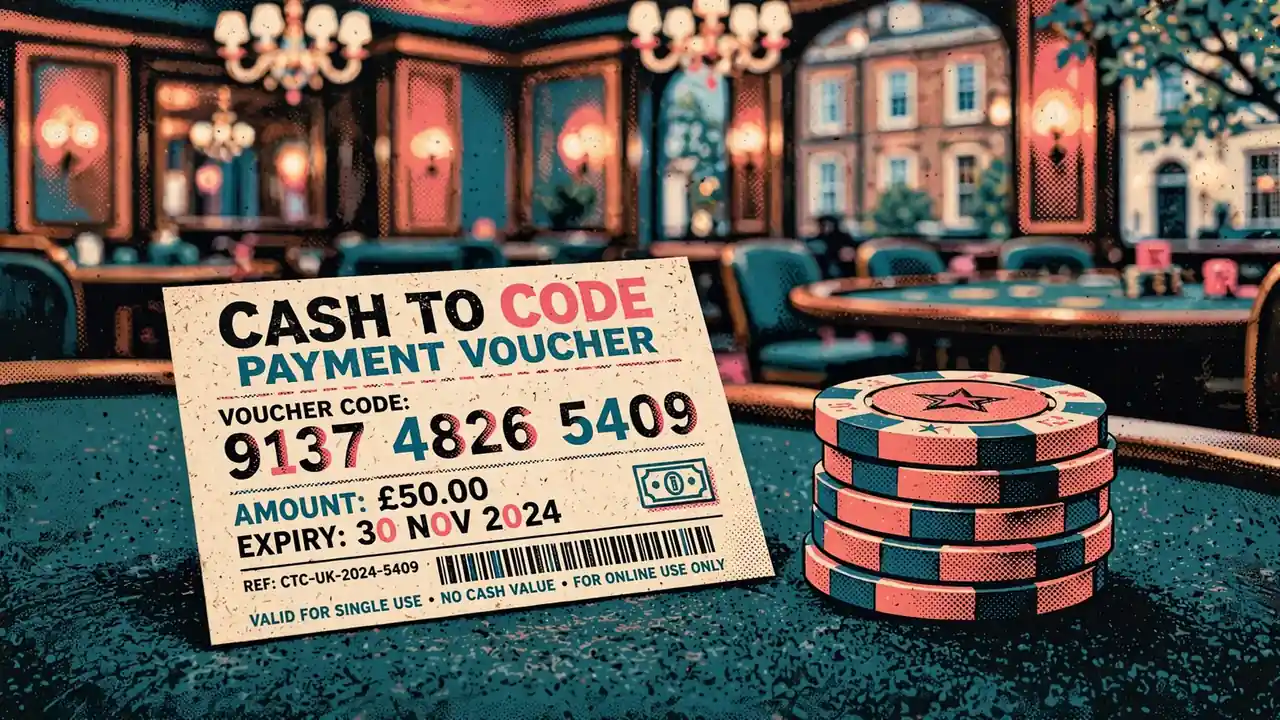
- Can You Still Pay by CashToCode at UK Casinos?
- If CashToCode Isn’t in the Cashier, What Can You Use Instead?
- Deposits Are Only Half the Story
- CashToCode, Mobile Play and Slot Compatibility
- Real-Money Slots: Check the Cash-Out Route First
- Cards, Deposits and the UK Credit-Card Rule
- Bonuses and the Payment Method Fine Print
- Minimum Deposits, Limits and Keeping Them in Check
- Other Payment Routes—and the Costs to Check
- CashToCode and GamStop: Don’t Assume One Tells You About the Other
CashToCode availability can vary by account, so verify the cashier and check deposit, withdrawal, bonus and limit terms before choosing a route.
Can You Still Pay by CashToCode at UK Casinos?
CashToCode still appears in searches from players looking for a simple way to fund a casino account, but a search result is not proof that the payment route is available when you actually register. I have made that mistake with payment methods before: I found a casino page naming a familiar option, opened the cashier, and discovered that the route was not offered to my account.
That is the important point with CashToCode in the UK. Do not treat a general payment list, an old review, or a page promising “the best” CashToCode casinos as confirmation. Open the casino’s cashier and check what is presented for your account at that moment.
Why a payment list is not enough
Payment options can change without the casino changing its name or games. A method may be removed, restricted to certain customers, or shown only after registration. The available route may also depend on the account’s country, currency, verification status or selected product. Those details are not something a broad “all CashToCode casinos” list can establish reliably.
Casinos That Accept Ukash in the UK: What to Check · UK Casinos That Accept MuchBetter: Check the Cashier
A specialist review may list Visa and Mastercard among the payment methods found on the sites it examined. That is useful as an indication of what those pages mentioned, but it is not confirmation that every UK customer can use every listed card product. The cashier remains the place to check current availability and eligibility.
The same approach applies to CashToCode. If the method is not visible in the cashier, you have no practical reason to rely on a page that says it is accepted. If it is visible, read the payment screen carefully before entering any funds.
A simple CashToCode check
I would check it in this order:
- Register an account with the details you intend to keep using.
- Complete any account steps the casino requires before showing payment options.
- Open the deposit cashier rather than relying on the casino’s homepage.
- Look for CashToCode in the currently displayed methods.
- Select it and read the instructions, availability notes and any restrictions shown before confirming a transaction.
- Check that the route is available to your account and not merely mentioned in a general payment list.
- Save the confirmation or payment reference if you proceed.
That process is less exciting than clicking a “top casinos” button, but it answers the question that matters: can your account use CashToCode now?
I would also check the cashier again if you return later. Payment screens are dynamic, and an option that appeared during one session may not be offered during another. I am not saying the method has disappeared everywhere. I am saying that availability should be confirmed at the point when you plan to deposit.
Check the exact payment product
The word “card” can hide a lot of detail. A casino may display a familiar card brand while applying eligibility rules to the particular product being used. That is why the current UK availability and card-product eligibility need to be checked in the cashier, rather than inferred from a brand logo or an old payment guide.
This matters when a page groups payment methods together. Seeing Visa or Mastercard listed does not tell you that every card carrying that branding will be accepted. Nor does a general statement about cards confirm anything about CashToCode. The relevant test is the payment option shown to you, under your account, with the product details you plan to use.
If the cashier displays CashToCode but then rejects the transaction, do not keep retrying blindly. Read the message, check whether the selected details match your account, and ask the casino’s support team whether the method is currently supported for your account. Keep the wording specific: ask about CashToCode availability for a UK account and the exact payment product, not just whether the casino “takes cards”.
Do not choose a casino from the payment name alone
The phrase “CashToCode casino” can make it sound as if the payment method defines the whole site. It does not. A casino may show a payment option without that being a reason to overlook its other terms, account checks or cashier information. I would treat CashToCode as one feature to verify, not as a badge saying that a site is suitable.
DO
- Check the live cashier after registering
- Verify if the method works for both deposits and withdrawals
- Read the specific instructions and restrictions shown on your screen
DON’T
- Rely on general payment lists or old reviews
- Assume a brand logo confirms eligibility for your specific account
- Treat a deposit-only method as a complete replacement for CashToCode
The same goes for pages advertising new casinos, bonuses or “best” sites that accept CashToCode. Those descriptions can age quickly, and the cashier may give a different answer from the article. A payment method being named in promotional copy is not the same as a currently available option.
So, are CashToCode casinos still available in the UK? The honest answer is account-specific: check the live cashier before relying on one. Look for CashToCode itself, confirm the payment instructions, and verify that the relevant product is eligible. If the option is absent, do not assume that a different page can make it appear.
That is the check that counts. Not the logo. Not the list.
Recommended online casinos
- Revery PlayBonus: 100% up to€1,000+ 100 FS · Payout speed: 1-3 business days
- x3betBonus: Welcome Pack 100% Up to £1.000 + 200 Free Spins · Payout speed: 1-3 business days
- BritsinoBonus: Welcome Package – Get your £2,200 + 2,000 FS · Payout speed: 1-3 business days
- SlotoSportBonus: 500% up to £ 10 200+ 777 FS · Payout speed: 1-3 business days
- NightLuckBonus: Welcome Pack + 805% Up To 6400€ + 280 FS · Payout speed: 1-3 business days
- AmunbetBonus: Join now and get 450% up to 2,700 GBP + 450 FS · Payout speed: 1-3 business days
- EvoSpinBonus: 125% up to €2500 + 125 Free Spins · Payout speed: 1-3 business days
- BeOnBetBonus: 100% up to €500 + 100 FS · Payout speed: 1-3 business days
- DieselwinBonus: Welcome Pack 250% up to £4000 + 200 FS · Payout speed: 1-3 business days
- ZombillionBonus: Welcome Pack 250% up to £4000 + 200 FS · Payout speed: 1-3 business days
If CashToCode Isn’t in the Cashier, What Can You Use Instead?
If CashToCode is not shown, the sensible move is to compare the payment methods that are actually available on that casino account. A payment logo on a general information page is not enough. The cashier is where you can see whether the method is enabled for your account, whether it accepts deposits, and whether it can also be used for withdrawals.
That last point matters more than I used to think. I once treated a payment method as suitable simply because it let me get money into the casino. Only later did I discover that the same route was deposit-only. Getting the balance funded was easy; getting funds out required a different arrangement.
Casinos That Accept Citadel in the UK: What to Check · Casinos That Accept iDEAL UK: Check Payment Options
Open banking and bank transfer
Open banking may appear as a direct option in the cashier, while a traditional bank transfer may require the casino’s account details and a payment reference. Both routes connect the casino with your bank account, but the process shown to you can differ from one site to another.
A specialist review describes open banking and bank transfers as capable of delivering immediate deposits and quick withdrawals at many sites. That is useful context, but not a promise about every casino. Your own bank, the casino’s payment provider and the account status can all affect what happens. Read the instructions displayed after selecting the method rather than relying on a general payment banner.
Bank transfer can be worth considering when you want to use an account in your own name and keep a clear record of the transaction. Before confirming anything, check:
- whether the cashier accepts bank transfer deposits;
- whether withdrawals can be sent back through the same route;
- which account details and reference must be used;
- whether the casino requires additional verification;
- whether the account currency matches the payment.
If the casino offers open banking, the payment screen may take you to your bank for authorisation. Do not assume that the presence of a familiar bank logo means every account or transfer type will be accepted. The available route is the one presented after you log in.
Prepaid vouchers
Paysafecard is the clearest example of a prepaid voucher used at casinos. You purchase a voucher separately and enter its details at the deposit stage. It can be useful if you do not want to enter card or bank details directly into the casino cashier.
There is a straightforward limitation: Paysafecard is deposit-only. It is therefore not a complete replacement for CashToCode if your main reason for choosing CashToCode was to have a route for both putting money in and receiving money back. Before using a voucher, decide where a later withdrawal would go and whether that separate method is available to you.
Prepaid vouchers like Paysafecard are typically deposit-only and may not provide a route for receiving withdrawals.
A prepaid voucher also needs to be selected in the cashier before purchase. Otherwise, you can end up holding a payment product that the particular casino does not accept. The same warning applies to voucher denominations and account currency: follow the casino’s displayed instructions instead of assuming that any voucher purchased in the UK will work there.
E-wallets
Skrill and Neteller may be available at some UK casino sites. They can be convenient when you already have a verified wallet and want to avoid entering bank details each time. However, availability does not mean that either wallet is enabled for every account, nor does it confirm that the casino supports withdrawals through it.
A specialist review describes Skrill as one of the most common deposit methods on UK-friendly casino sites in 2026. That describes its presence in the market, not a guarantee that a particular cashier will offer it. Neteller is also found at some sites, but the practical test remains the same: sign in, open the cashier and check the deposit and withdrawal tabs.
Wallets can also be treated differently by promotions. A specialist review says Skrill and Neteller are often excluded from bonuses. That is a payment-condition issue, not proof that the wallet itself is unsuitable. If a promotion matters to you, read its payment exclusions before depositing rather than assuming that an accepted method will qualify.
What to compare before choosing
The alternatives are not interchangeable:
| Method | What to establish before depositing |
|---|---|
| Open banking | Whether it is available for deposits and withdrawals on your account |
| Bank transfer | The required bank details, reference and withdrawal route |
| Paysafecard | Whether you accept that it is deposit-only |
| Skrill | Whether the wallet is available and covered by the promotion terms |
| Neteller | Whether both transaction directions are supported |
Casinos That Accept AstroPay in the UK: What to Check
I would also keep the payment account in the same name as the casino account. Matching ownership details makes basic checks less likely to cause avoidable trouble. It does not remove the casino’s right to request KYC, but it keeps the transaction information consistent.
For someone looking for alternatives to CashToCode at UK casinos, the shortest practical rule is this: choose the method from the logged-in cashier, then check both directions before committing funds. A deposit button answers only half the question. The withdrawal option is the part people tend to notice too late.
Deposits Are Only Half the Story
A payment method can get money into a casino account without giving you a simple route back out. That is the bit I used to overlook. I would look at the cashier, see a familiar deposit option, and treat that as proof that withdrawing would work the same way. It does not.
For CashToCode, the important question is not only whether the cashier accepts it for a deposit. Before paying, check how the casino handles withdrawals and whether the same payment route is eligible for them. A deposit option may be restricted to funding an account, while withdrawals follow separate rules set by the remote gambling licensee.
Attention UK anti-money laundering controls may require payouts to be returned to the original payment source used for the deposit.
Why the money may need to go back
UK anti-money laundering controls commonly require a payout to be returned to the payment source used for the deposit. This is part of the closed-loop approach to gambling transactions: the casino checks where the funds came from before deciding how they can be sent back.
That can make a CashToCode deposit less straightforward than it first appears. If the cashier accepts CashToCode for deposits, do not assume that the balance can automatically be paid into any other account you choose. The available withdrawal route may depend on the original transaction, the account details and the casino’s own payment rules.
Use payment and account details belonging to the same customer. Keeping ownership consistent reduces the chance of basic information creating avoidable friction when the transaction is reviewed. It is not a shortcut around KYC, but it removes one obvious source of delay.
If the original route cannot receive withdrawals, the casino may ask for another method or apply an alternative process. That can bring extra checks. Returning funds to the original source remains a common anti-fraud and anti-money-laundering control, while a different withdrawal route may require additional verification.
The first payout can take longer
A withdrawal is not necessarily sent as soon as you press the button. The casino may first review the request internally, check the account and complete any outstanding verification. A specialist review describes first withdrawals as potentially taking longer while these checks are completed.
Why the first payout may be delayed
First withdrawals can take longer because the casino may need to complete internal reviews and verify your identity through KYC processes.
That is why the first cash-out can feel slower than later requests. The delay is not necessarily caused by CashToCode itself. It may be connected to the casino’s approval process or to documents still needed for KYC. Withdrawal speed depends on both factors: how the casino approves payments and whether your account is fully verified.
I would therefore treat the first withdrawal as a separate test of the cashier, not as a routine reversal of the deposit. Check whether the casino has asked for identity information, whether the withdrawal method is available to your account and whether any payment instructions need to be followed before requesting the payout.
What to check before depositing
Before using CashToCode at a UK casino, look for these points in the cashier and payment terms:
- whether CashToCode is available for withdrawals as well as deposits;
- whether the casino requires the payout to return to the original payment source;
- whether another method is needed if the original source cannot receive funds;
- whether your account has completed the required KYC checks;
- whether the casino states that first withdrawals receive additional review;
- whether the account and payment details match your own identity.
Do not read a successful deposit as evidence that the cash-out route is equally available. The cashier can accept a payment for one purpose while applying different conditions when money leaves the account. That distinction matters more than a “smooth” deposit label.
The practical test is simple: identify the withdrawal path before committing funds. A payment method that works at the front door may not be the route used at the exit. Quite a difference.
CashToCode, Mobile Play and Slot Compatibility
CashToCode and mobile slot compatibility are two separate checks. A casino can have games that run in a mobile browser while not showing CashToCode as a payment option. The reverse can also happen: a payment route may appear in the cashier, but the casino’s mobile experience may be awkward or limited.
I learned this the irritating way. I treated a payment logo as if it told me something about the games, then assumed that a phone-friendly casino would accept the payment method I wanted. It does not work like that. The cashier deals with funding. The game lobby deals with whether the slots load and play properly on your device.
What to check on your phone
Open the casino on the actual phone you intend to use and look at the cashier before choosing a game. Sign-in requirements can affect which payment methods appear, so check from your own account rather than relying on a general payments page.
Look specifically for:
- CashToCode displayed as an available deposit method;
- any stated restrictions attached to that method;
- the casino’s mobile game lobby loading correctly;
- the slot interface responding properly to touch controls;
- the balance updating after a transaction.
Do not assume that a page mentioning “online slots” means every payment method works with those games. In practice, the payment is made to the casino account, not to an individual slot. That means the relevant question is whether CashToCode is available in the account cashier—not whether a particular game carries a special CashToCode label.
A specialist review lists Visa and Mastercard among the payment methods seen across the supplied sites, but that is not a substitute for checking your own cashier. Current UK availability and card-product eligibility can change. The same caution applies when you see old payment logos, screenshots or articles describing a casino’s previous setup.
Mobile does not mean an app
A casino may offer a mobile website without offering a dedicated app. I would not treat the absence of an app as proof that the games are unsuitable for a phone, and I would not treat an app listing as proof that CashToCode is supported. Those are separate product decisions.
The sensible test is simple: log in through your phone’s browser, inspect the cashier, and then open the game lobby. If CashToCode is not shown there, do not deposit on the assumption that a slot page will somehow make it available. If the cashier does show it, confirm the transaction details before proceeding.
Searches for real-money mobile slots using CashToCode often blur these issues together. “Mobile”, “slots” and “payment” describe different parts of the experience. The payment method tells you how money may enter the casino account; it does not promise a particular mobile layout, game selection or app.
For free-play pages, the distinction is even clearer. A free slot does not process a deposit, so it cannot demonstrate that CashToCode works at the same casino. It only shows that some game content can be opened without a payment transaction.
Keep the two checks apart. Cashier first, game second.
Mobile Compatibility Check
- Verify CashToCode is available in the mobile cashier
- Check for any mobile-specific transaction restrictions
- Ensure the game lobby loads correctly on your device
- Test that the slot interface responds to touch controls
- Confirm the balance updates correctly after a mobile transaction
Real-Money Slots: Check the Cash-Out Route First
When you play slots for real money, the deposit button is only the first half of the payment decision. I have made the mistake of treating a successful deposit as proof that the whole money route would be just as simple. It is not. A payment method can get funds into the casino account quickly while the return journey follows a separate process.
That matters with CashToCode. Seeing a CashToCode option in a cashier, or finding a casino page that talks about it, does not by itself tell you how winnings will be paid out. Before committing money to a slot session, open the withdrawal area as well. Look for the available payout methods, any instructions about the original payment source, and whether the route you have in mind is actually offered for withdrawals.
Fast in does not mean fast out
A card deposit may appear instantly, while the resulting payout takes several business days. That contrast is reported in a specialist review, and it is the sort of detail that disappears behind the word “instant”. In practice, “instant” may describe only the deposit being credited to your balance. It says nothing about the casino’s approval process or the time taken for the money to reach you.
I now separate the two questions:
- How quickly can I fund the account?
- How will I receive money if the slots produce a withdrawal?
The second answer is the one worth checking before you play. A payment method that looks attractive at the cashier may be deposit-focused, while a different route may be required when you request a payout. That can mean extra checks, another payment account, or simply more waiting than the deposit suggested.
Compare the withdrawal route, not the sales wording
A specialist review identifies PayPal, open banking services and debit cards connected to fast payout systems as being among the quicker withdrawal options. That is a description of a source’s assessment, not a promise for every casino or account. Processing still depends on the particular payment setup and the casino’s handling of the request.
So, when considering slots using CashToCode, I would not judge the site by the payment logo alone. I would check whether the cashier clearly separates deposits from withdrawals and whether the stated cash-out route suits you. If the information is vague, ask support before depositing rather than after winning.
Casinos That Accept eCheck in the UK: Payment Guide
There is another practical point: the game itself does not change the payout mechanics. Whether you call it a slot machine, a real-money slots site or simply online slots, the important question remains where an approved withdrawal goes and how long that stage can take. “Quick deposit” is not the same as “quick cash-out”.
That distinction saved me from making the same assumption twice. Check the exit first.
Cards, Deposits and the UK Credit-Card Rule
When you are looking at a CashToCode deposit, it helps to separate the payment method from the card sitting in your wallet. A casino may accept debit cards without accepting CashToCode, while CashToCode’s availability tells you nothing about whether Visa or Mastercard debit payments are enabled on that particular account.
UK casinos commonly accept debit cards, including Visa and Mastercard. That makes a debit card one of the familiar ways to fund a casino account, but “familiar” is not the same as guaranteed. Payment options can differ between remote gambling licensees, and the cashier is the practical place to confirm what your account can use before you try to deposit.
UK Credit Rule
UK-licensed casinos are prohibited from accepting credit-card payments for gambling.
A debit card and a credit card are not interchangeable here. UK-licensed casinos cannot accept credit-card payments for gambling. The regulator introduced the ban on 14 April 2020, and it has not been relaxed. That covers a direct credit-card deposit, so using a search phrase such as “CashToCode credit-card casinos” can create the wrong expectation: CashToCode is a separate payment route, not a way to make credit-card gambling acceptable.
The same point applies if you are comparing CashToCode with instant banking or a debit card linked to a quicker payment service. Those are different rails with different availability. A casino’s cashier may show one, several or none of them. Do not assume that a site listing cards also supports CashToCode, or that a CashToCode reference means every card product will work.
I have made the mistake of treating a logo on a payments page as a promise that the method would appear when I actually logged in. It is better to check the deposit screen after registration and age verification, then confirm that the selected card type is permitted. A debit card issued by Visa or Mastercard is the relevant card category; a credit card remains excluded from gambling deposits at UK-licensed casinos.
The wording on payment pages can also be loose. “Card payments” may refer to debit cards only, or may sit beside separate options that are unavailable to your account. Read the cashier rather than relying on a general payment badge.
CashToCode is therefore not a workaround for the UK credit-card rule. It must be assessed on its own availability, while any card deposit must use an eligible debit card. Keep those two checks separate. Less confusion.
Casinos That Accept Maestro in the UK · Casinos That Accept Monzo in the UK: What to Check
Bonuses and the Payment Method Fine Print
A payment option appearing in the cashier does not automatically make it eligible for a welcome bonus. I learned that the annoying way: I treated the deposit route as a formality, then found the promotion terms were doing something else entirely. The cashier answers “can I pay this way?” The bonus rules answer “will this payment count?”
That distinction matters when you are looking for a CashToCode welcome bonus or real-money slots promotion. Before entering a bonus code or making a deposit, open the full promotion terms and look for the payment-method wording. It may identify eligible methods directly, exclude particular wallets and vouchers, or require a qualifying deposit through a specified route. If CashToCode is listed in the cashier but not mentioned in the promotion rules, do not treat that silence as approval.
I also check the terms before assuming a “no deposit” offer has anything to do with the payment method. A promotion that does not require a deposit is a separate arrangement from a bonus attached to a CashToCode payment. The same applies to slot-focused promotions: the word “slots” describes where the bonus may be used, not whether every deposit method qualifies.
Payment exclusions are not limited to CashToCode. A specialist affiliate review reports that PayPal can be popular for speed and convenience while being left out of bonus eligibility. The same type of source reports that Skrill and Neteller are available at some sites but are often excluded from promotions. Those are useful warnings, not permanent rules for every casino or every offer. I would still read the operator’s current terms rather than rely on a payment-method label or an old review.
Bonus Eligibility
Always verify that your chosen payment method is explicitly accepted within the specific terms of a promotion.
Pay attention to the wording around the qualifying transaction, too. Check whether the offer names a particular deposit route, whether the bonus must be claimed before paying, and whether the payment method is mentioned among exclusions. Keep a copy of the terms shown when you claim the promotion; pages can change, and a screenshot is easier to refer back to than a vague memory.
My rule is simple: confirm the CashToCode option in the cashier, then confirm the promotion accepts it. Two separate checks. That small pause can prevent a deposit from being treated as non-qualifying before you even start playing.
Minimum Deposits, Limits and Keeping Them in Check
The first figure to look for is not the headline bonus. It is the minimum deposit shown beside the payment method in the cashier. A specialist review puts the starting point for many UK casino deposits at £10–£20, but that is not a CashToCode rule carved into stone. The amount can depend on the route selected, and the cashier is the place where the live requirement appears.
Casinos That Accept Bitcoin in the UK: Payment Checks
That matters if you are looking for a £5 entry point. A search result, an old payment page or a general casino guide cannot turn £5 into an available minimum. If CashToCode appears in your cashier, read the amount displayed there before creating a payment. If it does not appear, the question is settled for that account at that moment: you cannot rely on a promised CashToCode minimum from somewhere else.
I made the mistake of treating a minimum as though it also explained the maximum. It does not. Deposit ceilings can be set per transaction, per day or per month, and the amount may change according to the payment method and the status of your account. A payment route that accepts a modest first deposit may not offer the same headroom later. The account tells the truth.
Before entering anything, check three separate details:
- the minimum accepted for the selected method;
- the maximum for that transaction and any daily or monthly ceiling;
- whether your account status changes the amount available.
Do not confuse those controls with a payment provider’s own limits. The casino cashier may show one figure while the payment service applies another. Where the two differ, the tighter limit is the one that matters.
There is also a responsible-gambling control you should see before depositing for the first time. UKGC rules require remote gambling licensees to ask a new customer to set a financial limit before that first deposit is accepted. You should also be able to reach limit controls from your account afterwards, rather than having to search through support pages or send a message.
I prefer setting the limit before choosing a payment method. It removes the familiar “I’ll decide later” trick, especially when an instant-deposit button makes the next click feel automatic. CashToCode, mobile payment or another route does not change that basic control: the limit belongs to the gambling account, not to the brand printed on the cashier.
Setting Limits
Step 1: Identify minimums
Locate the minimum deposit amount required for your chosen method in the cashier.
Step 2: Check ceilings
Verify the maximum allowed per transaction and any daily or monthly limits.
Step 3: Apply controls
Set your financial limits through the casino’s responsible gambling tools before your first deposit.
Other Payment Routes—and the Costs to Check
When CashToCode is not the right route, I compare the cost of moving money rather than chasing a label such as “best alternative”. That word often hides the part that matters: what leaves your bank account, what reaches the casino, and what comes back if you later withdraw.
Bank transfer and open banking can look attractive because a specialist review describes them as offering instant deposits and fast withdrawals at many sites. That is useful context, but it is not a promise for every cashier. The actual route still matters. A bank may apply its own charge, a transfer can involve a currency conversion, and the casino may display different rules for a particular payment channel.
Paysafecard needs a different calculation. It is a prepaid voucher for deposits only, so it should not be treated as a complete replacement for a payment method that also handles withdrawals. Before buying a voucher, I would check the casino cashier and the voucher terms together. Otherwise, you can fund the account and still need another route for any money you later request.
The visible casino fee is only one part of the bill. Potential costs include:
- a charge from the casino;
- a fee from the payment provider;
- an issuer or bank fee;
- an exchange-rate spread;
- a network fee.
This is where I made a basic mistake before: I compared the headline charge and ignored the exchange rate. A conversion spread can cost more than a separate flat fee, particularly when the account currency and the payment account do not match. Check that the casino account is set to GBP before making the transaction, then look at the amount that will actually be debited.
There is no universal lowest-cost option. The result depends on the payment route, the provider, the bank or card issuer, the currency and the amount involved. Read the cashier’s fee notice, check the provider’s own charge, and confirm whether your bank applies conversion or network costs.
Cheap on screen. Different at checkout.
CashToCode and GamStop: Don’t Assume One Tells You About the Other
CashToCode and GamStop answer two completely different questions. CashToCode is a payment route. GamStop concerns whether a gambling account falls within a self-exclusion arrangement. Seeing one mentioned on a casino page does not prove anything about the other.
Casinos That Accept E-Cheques in the UK
That matters when a site presents itself as a “non-GamStop casino”. The label tells you what the operator claims about its relationship with GamStop, not whether CashToCode can be used there. Equally, a cashier showing CashToCode would not prove that the casino is outside GamStop. Payment acceptance is not evidence of self-exclusion status.
I have made the mistake of treating a payment logo as a shortcut to the rest of a site’s profile. It is not. A cashier can change, payment eligibility can depend on the account, and promotional pages can remain online after arrangements change. Separate checks are needed.
For anyone looking for casinos not connected to GamStop that accept CashToCode in the UK, keep the checks separate:
- Confirm whether the operator currently states its GamStop position in its own terms or responsible-gambling information.
- Check the cashier after registration to see whether CashToCode is actually offered for your account.
- Confirm that the casino is legally permitted to serve British customers by checking its licence number on the UK Gambling Commission public register.
- Read the withdrawal and account-verification wording before depositing; a payment option does not settle those conditions.
- Treat lists of “CashToCode slots not on GamStop” with care. A slot itself is not what establishes a casino’s GamStop status.
There is no sound basis for recommending a particular non-GamStop site simply because a page pairs its name with CashToCode. The two claims need independent, current confirmation, and one may change without the other changing. If the operator’s position is unclear, or the cashier does not display CashToCode once you are logged in, do not treat a search result or a payment badge as confirmation.
Different checks. Same wallet.
Can I use a credit card at 333 Casino in Great Britain?
No. Credit card gambling has been banned for UK-licensed casinos since 14 April 2020; check the cashier for eligible debit card options.
Why must withdrawals return to the deposit method?
Returning funds to the original payment source is a common anti-fraud and anti-money-laundering control. An alternative route may require additional verification.
Do UK casino withdrawals require verification?
You may need to complete verification before a withdrawal is approved, especially for a first payout. An account that is not fully verified can take longer to process.
Which payment methods are accepted in Great Britain?
UK casino cashiers commonly offer debit cards, bank transfers or open banking, and may also offer PayPal, Skrill, Neteller or Paysafecard. Check your account’s cashier, since availability varies and Paysafecard is for deposits only.
Are Visa and Mastercard deposits definitely debit cards?
No. The card brand alone does not confirm that a particular card product is eligible; check the cashier’s requirements. Credit card gambling is banned at UK-licensed casinos.
Why can a fast payout casino still delay my withdrawal?
A fast payment method does not bypass the casino’s internal approval process. Verification, particularly for a first withdrawal, can add time before the payment is sent.
Can I deposit in GBP?
Yes, GBP is supported, but confirm that your account is set to GBP before paying to avoid currency conversion.