
 Available in GB
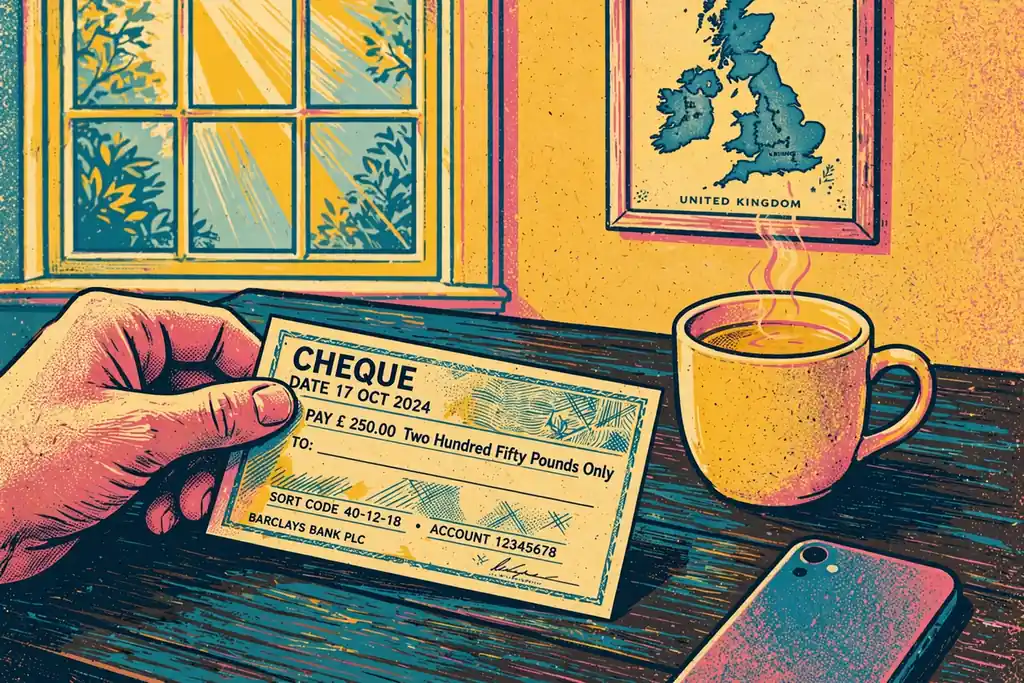
- Can You Confirm an E-Cheque Option Before You Sign Up?
- What to Check in an Online Casino Cashier
- Choosing a Payment Route Without Guessing
- Deposit Amounts, Limits and the First Transaction
- Costs That Can Hide Behind a Payment
- Why a Casino Payment List Needs Checking
- E-Cheque Payments: Check the Route and Currency
- Deposits Are Not the Same as Withdrawals
- Keeping Payment Details Consistent
- Payment Checks for UK Players
A method listed on a payment page may not appear in the live cashier, and deposit availability does not confirm a withdrawal route.
Can You Confirm an E-Cheque Option Before You Sign Up?
If you are trying to find casinos that accept e-cheques in the UK, the awkward part is that a payment method mentioned somewhere online is not proof that you can use it at the casino you choose. I would not label a particular operator an “e-cheque casino” unless the option is visible in its own cashier for the account being used.
That distinction matters. A payment page may describe several ways to fund an account, while the live cashier presents a shorter list. An older review may mention e-cheques even though the route has since been removed. A comparison page may group together payment methods seen across several operators rather than show what one specific UK customer can use. The wording can sound definite. The button may still be absent.
I have made the mistake of treating a payment logo as confirmation. It is not. A logo can mean that the casino has supported the method at some point, that the method is available in another country, or that it is offered only to selected accounts. None of those possibilities confirms that an e-cheque deposit will work for you today.
Casinos That Accept Entropay in the UK: What to Check
Why a casino’s payment list is not fixed
Payment availability is controlled at the account and cashier level, not just by the casino’s general marketing material. Two customers visiting the same site may not see identical options. Location, account currency, account status and the payment products enabled for that customer can affect what appears.
The cashier can also distinguish between a method being displayed and a method being usable. A logo may appear in a general payment overview, but the route may not be selectable after you log in. In another case, the method may appear for deposits but not be offered when you later request a payout. That is why a broad statement such as “this site accepts e-cheques” is too blunt to rely on.
The same caution applies to cards. A specialist review may list Visa and Mastercard among the payment methods found on the sites it examined. That does not establish current availability for every UK customer, nor does it confirm that every card product will be accepted. The cashier remains the relevant place to see what is enabled for your account.
Bank transfers, e-wallets and cryptocurrencies can appear in similar lists. Their presence tells you that these categories exist among the payment routes discussed, not that every casino offers every route, or that a particular customer can use each one. Payment names travel quickly across review pages. Availability moves more quietly.
Casinos That Accept Ethereum in the UK: What to Check
What “accepts e-cheques” should mean
For a claim to be useful, it should mean more than “e-cheques are mentioned somewhere”. It should mean that the method is presented in the casino’s current cashier for a UK account and that the transaction can be initiated under the conditions shown there.
Even that wording should be read carefully. A deposit option does not automatically tell you how the casino handles money coming back out. Some methods are designed for deposits only, while others may be available in both directions. You should not assume that an e-cheque route supports withdrawals simply because it appears beside the deposit button.
There is another layer as well: the account must be eligible to use the route. The casino may ask for identity or ownership information before allowing a transaction. If the payment details do not match the customer account, the transaction can face avoidable friction. That is not evidence that e-cheques are accepted or rejected across the market; it is an account-specific issue.
So, when you see phrases such as “best e-cheque casinos UK” or “top online casinos accepting e-cheques”, treat the wording as a starting point, not a settled result. “Best” often describes a reviewer’s preference. “Accepting” may refer to a payment list rather than a live customer cashier. Neither word replaces checking the actual route.
How to avoid a false confirmation
Before creating an account, look for the casino’s own payment information, but do not stop there. Once access is available, open the cashier and see whether e-cheque is presented as an available method for the relevant account. If the option is not shown, do not deposit on the assumption that customer support will add it later.
DO
- Open the cashier after signing in
- Ask support if the route applies to UK customers and your specific account
- Rely on the live payment interface
DON’T
- Assume a payment logo confirms availability
- Deposit on the assumption that support will add a method later
- Trust a general “we support many methods” reply
If support tells you that the route exists, ask whether that answer applies to UK customers and to your account, rather than to the operator in general. Keep the response, but still rely on the live payment interface before sending money. A general “we support many methods” reply is not the same as confirmation of one named route.
Do not let a familiar brand name settle the question either. A well-known casino can change its payment arrangements, and a less familiar site can show a different cashier from the one described in an old article. The name of the operator is not the payment confirmation.
My practical rule is simple: no e-cheque button, no e-cheque assumption. That may sound cautious, but it prevents the common mistake of choosing a casino first and discovering later that the payment route you wanted was never available to your account. Check the live cashier. Then decide.
What to Check in an Online Casino Cashier
The cashier is where a payment method stops being a name on a page and becomes a real option for your account. That distinction matters with e-cheques. A casino may mention several payment routes in general information, while the cashier shown to a UK customer presents something different. Your account, location and available payment settings are what count at the moment you are ready to transact.
I learned this the irritating way. I read a payment list, assumed the method would be waiting for me after registration, and only then discovered that the useful detail was inside the cashier. Since then, I treat the cashier as the practical check, not the promotional page.
Casinos That Accept Neteller in the UK
Check what appears after signing in
Open the deposit area while logged in and look for the e-cheque option by its exact name. Do not rely on a banner, an old review or a general payment-method page. Those pages may describe the casino broadly, but the cashier is tied to the customer account you are actually using.
The first question is simple: can you select the method as a UK customer? If the option is absent, greyed out or replaced by an instruction to contact support, you do not have a confirmed route at that point. It may be available to another customer or under different account conditions, but that does not make it available to you.
I also check whether the cashier asks me to choose a country, currency or account profile before displaying the method. That matters because a payment route can be presented differently according to the details attached to the account. I would rather spend a minute checking the screen than assume that an e-cheque online casino site will offer the same cashier to every player.
Separate deposits from withdrawals
Seeing e-cheque under “Deposit” is only half a check. A payment method can be displayed for adding funds without being offered for taking funds out. The withdrawal page needs to be inspected separately.
I look for three things:
- whether e-cheque appears in the deposit methods;
- whether it appears independently in the withdrawal methods;
- whether the instructions describe what happens in each direction.
If it is listed only for deposits, treat it as deposit-only. Do not describe that casino as an online casino that accepts e-cheques for the complete payment journey. “Accepts” is too vague when you are trying to fund an account and later receive a payout.
The same caution applies in reverse. A withdrawal option on its own does not prove that the casino will accept an e-cheque deposit. The two screens answer different questions. I check both before deciding that the route is compatible with what I need.
Match the account to the payment route
The details in the casino account should belong to the same customer who owns the payment route. That includes the name and the basic ownership information used for the transaction. Keeping those details aligned reduces the chance that an avoidable ownership question interrupts the payment.
This is not about making the cashier look tidy. It is about avoiding a mismatch before money moves. If the casino account is in one name and the payment route is associated with someone else, the transaction may become harder to explain. I would not try to solve that by entering altered details or borrowing another person’s route.
The cleanest arrangement is using one named account consistently for both deposits and withdrawals to keep the payment trail clear and avoid ownership discussions.
The cleanest arrangement is often one named account used consistently for both deposit and withdrawal. It keeps the payment trail easier to understand and avoids turning a routine cashier check into a discussion about who owns the funds.
Read the method-specific instructions
Click through the e-cheque option far enough to see its instructions, but do not confirm a transaction merely to discover how the route works. The useful information may appear in a panel, a pop-up or the next cashier step.
Check whether the casino identifies the method as available to your account, rather than merely displaying an icon. Look for separate instructions for depositing and withdrawing. If the wording is unclear, ask customer support a direct question: “Can my UK account use e-cheque for deposits and withdrawals?” Keep the answer with your account notes.
I avoid accepting a vague reply such as “we support many payment methods”. That answers a different question. The relevant point is whether this particular account can use this particular route in the direction I need.
Do the check before committing
For anyone comparing e-cheque online casino options in the UK, the useful order is straightforward: sign in, open the cashier, inspect the deposit screen, inspect the withdrawal screen, and confirm that the account and payment details belong to the same customer.
UK Casinos That Accept Bank Cheques: What to Check
Only then is it sensible to decide whether the route fits. A page calling itself a top or best e-cheque casino list cannot replace that check, because the cashier is where availability becomes specific to you. If the method is missing, unclear or available in only one direction, pause rather than filling the gap with an assumption.
That small habit has saved me more trouble than any polished payment table. Check both sides. Keep names aligned.
Choosing a Payment Route Without Guessing
Once you have checked what appears in the cashier, the useful question changes. It is no longer “which casino claims to support e-cheques?” It becomes “which of the methods available to my account makes sense for this transaction?” That small change matters. A payment route is only a real option when the casino presents it to you, in your account, with the relevant action available.
I have made the mistake of choosing a method from a review page and only discovering later that it was not offered at the cashier. The page may have been describing another account, another country, or an older version of the payment menu. The cashier is less exciting than a neat comparison table, but it is the place where the decision becomes practical.
Start with the methods you can actually use
Open the payment section after signing in and separate the visible choices into three groups:
- methods shown for adding funds;
- methods shown for receiving funds;
- methods displayed for both purposes.
That last group deserves attention. A route that appears only under deposits cannot be treated as a complete deposit-and-withdrawal solution. It may still be suitable if you are deliberately choosing a deposit-only method, but do not assume that the same route will later handle a payout.
This is particularly important when you are looking for an e-cheque route. If the term is absent from the cashier, do not substitute a bank transfer, card, or e-wallet merely because all of them move money electronically. They are different payment arrangements, with different account details and processing paths. Choose from what the casino actually offers rather than trying to force one method into the description of another.
The same check applies on a phone. A mobile cashier may show a shortened menu, open a separate payment window, or hide some information behind a button. I would check the method name, the available transaction direction, and any accompanying instructions before entering an amount. A mobile layout is not proof that every desktop option is available, and a familiar logo is not proof that it is enabled for your account.
Match the route to the account you hold
The payment method should fit the account details you are using at the casino. If the casino account is registered in your name, use a payment account or card that also belongs to you. That keeps the basic ownership information aligned and reduces avoidable questions when the transaction is reviewed.
This is not about making one route sound “best” for everyone. A debit card may be the straightforward choice for one person, while another may prefer a bank-based route already connected to their own account. UK casinos commonly accept debit cards, including Visa and Mastercard, but the particular card still needs to be eligible when you reach the cashier. A card logo on a general payment page does not replace that check.
Casinos That Accept Boku in the UK: What to Check
I also avoid jumping between several payment accounts without a clear reason. Keeping one named route for deposits and withdrawals makes the trail easier to understand. It can also prevent a payout request from turning into a discussion about who owns the payment instrument. That is one of those boring details that only becomes interesting after something is held for review.
Before confirming a method, compare the information it asks for with the information already held on your casino account. Look for the account holder name, registered address where requested, currency, and any reference or bank details. A mismatch is not automatically proof that the route is unusable, but it is a reason to stop and clarify rather than send money first.
Compare confirmed alternatives fairly
If an e-cheque option is visible and usable for your account, compare it with the other confirmed routes beside it. Do not compare a live cashier option with a payment method mentioned somewhere else but unavailable to you. That is not a comparison; it is a guess wearing a tidy shirt.
Attention Never compare a live cashier option with a payment method mentioned elsewhere that is unavailable to you; it is a guess rather than a real comparison.
For a bank-based route, check whether the cashier describes deposits and withdrawals separately. A specialist review has described open banking and bank transfers as capable of providing instant deposits and fast withdrawals at many sites, but that is not a promise for every casino or every account. The live instructions still decide what happens in your case. Bank transfer delivery can also be affected by cut-off times, weekends, and currency conversion, so a headline about speed should not settle the choice on its own.
I would then check the amount you intend to move against the method’s displayed conditions, without assuming that one payment route has the lowest overall cost. A specialist review has noted that there is no single cheapest method for every transaction. Casino charges, provider fees, exchange-rate spread, and network costs can all affect the result. The relevant comparison is the one shown for your account, currency, and planned payment—not a generic claim attached to a method.
Finally, read the confirmation screen before authorising anything. It should make clear which route is being used, where the funds are going, and whether the action is a deposit or a withdrawal. If the details do not match what you expected, cancel and return to the cashier.
That is the whole principle: confirmed option, matching ownership details, clear transaction direction. No guessing.
UK Casinos That Accept MuchBetter: Check the Cashier
Deposit Amounts, Limits and the First Transaction
The first amount you can deposit is not necessarily the amount you had in mind when you opened the cashier. For UK casino accounts, the displayed minimum often begins at £10–£20, with the exact figure depending on the payment method selected. That range comes from a specialist affiliate review, so I treat it as a useful indication rather than a promise that every cashier will show the same starting point.
That matters when you are looking at an e-cheque option. Even if the payment route appears in the cashier, its minimum may not match the minimum shown for a debit card, bank transfer or another available method. The amount belongs to the selected route, not simply to the casino account as a whole.
I have made the mistake of deciding how much to deposit before opening the payment window. It sounds harmless, but the cashier is where the practical details appear: the method, the permitted amount and any account-specific restriction. Better to check first, then decide. Less guesswork.
The amount shown is account-specific
A cashier may display more than one type of limit. There can be a minimum for a single deposit and a maximum applying to one transaction. Separate controls may also apply across a day or a month. Those maximums can vary according to the payment method and the status of the account.
Understanding Limits
Limits can vary significantly between different payment methods. A figure seen in a general guide may not apply to your specific account or the specific route you select. Always check the live maximums and minimums shown in your cashier after you have logged in.
That means a figure seen in a general payment guide should not be treated as your personal allowance. A newly opened account may not show the same limit as an established, fully checked account, and one payment route may have a different ceiling from another. The only useful figure is the one presented after signing in and selecting the intended method.
This is particularly relevant when comparing casino sites that appear to support the same route. Two cashiers can use similar payment labels while presenting different minimums or maximums. The name of the method does not settle the transaction rules.
Before entering any amount, check:
- the minimum deposit shown for the selected method;
- the maximum allowed for that transaction;
- whether a daily or monthly limit is also displayed;
- whether the account status affects the amount available;
- whether the cashier has changed the figure after you select the payment route.
I would also avoid assuming that a limit shown before selecting a method applies to an e-cheque deposit. Payment screens often separate methods for a reason. If e-cheque is not offered as a selectable route, do not substitute another method and assume the same terms will carry across.
Set the financial limit first
There is another step before the first deposit. Remote gambling operators must prompt a new customer to set a financial limit before allowing that initial deposit. The account should also provide accessible controls for changing or reviewing limits at account level.
I see this as part of planning the transaction, not as an interruption before the “real” payment begins. Decide what you are comfortable depositing, then compare that decision with the amount the cashier permits. The casino’s payment minimum and your own financial limit are different controls: one determines what the system will accept for the transaction, while the other helps you manage your account.
Casinos That Accept Interac in the UK: What to Check
If the cashier shows a minimum above the amount you intended to use, stop rather than stretching the deposit to fit. A payment route is not automatically suitable just because it is displayed. The same applies when a maximum appears lower than expected; that can reflect the selected method or the current account status rather than a fault.
For someone assessing e-cheque casino sites in the UK, the sensible order is straightforward: open the account, complete the required checks, set the financial limit, select the payment method and read the live limits. Only then decide whether the first deposit suits your plan. The screen tells you more than a polished payment list ever will.
Small check. Big difference.
Costs That Can Hide Behind a Payment
The number shown beside a payment method is not always the full cost of using it. I have made that mistake myself: I saw a simple fee in the cashier, treated it as the price, and only later noticed that the amount leaving my account did not tell the whole story.
For an e-cheque route, the possible charges can come from several places:
- the casino itself;
- the payment provider handling the transaction;
- your bank or card issuer;
- currency conversion;
- the payment network carrying the transaction.
That does not mean every charge will apply to every payment. It means the cashier’s displayed fee is only one part of the check. A casino may show no separate charge while another party involved in the transfer applies its own pricing. The payment provider’s terms and your bank’s terms matter as much as the casino’s payment page.
Look beyond the flat fee
A visible fixed charge is easy to compare. If one cashier displays a fee and another does not, the difference looks obvious. The less obvious part is the exchange rate. A payment made in a currency different from the one used by your account may include a conversion spread: the gap between the underlying exchange rate and the rate actually applied to the transaction.
A specialist review has pointed out that this spread can cost more than a plainly displayed flat fee. That is why “no fee” should not automatically be read as “free”. The cost may simply be built into the conversion rather than written as a separate line.
"No fee" does not always mean free; the cost may be built into the currency conversion spread between the underlying exchange rate and the rate applied to your transaction.
Before confirming an e-cheque payment, check the currency in which the casino account is operated and the currency used by the payment route. Then look for wording about conversion, provider charges and bank fees. If the cashier does not explain something clearly, the payment provider’s own terms may fill in the missing detail. I would rather pause there than discover the charge after the transaction has settled.
Compare the actual transaction
There is no universal lowest-cost payment method. The sensible comparison is tied to the payment you are actually making: the casino’s charge, the provider’s charge, any bank or issuer cost, the exchange-rate spread and possible network fees.
This applies when comparing an e-cheque casino with another available route as well. “Best” should not mean the method with the neatest label in a review. It should mean the route whose total cost you can understand before authorising it. If the figures are unclear, treat that uncertainty as part of the cost.
Cheap-looking can still be expensive.
Why a Casino Payment List Needs Checking
A single list of casinos and payment methods sounds like the answer. You could scan it, find an e-cheque logo, and move straight to registration without opening several cashier pages. I understand the appeal. I have wasted enough time signing up first and discovering that the payment method I wanted was nowhere to be found.
The problem is that a list can become outdated or oversimplified. A casino may have supported a particular route when the list was prepared, while its current cashier shows something different. The same page might mention cards, wallets and bank transfers without confirming whether every method is available to every UK customer. That is a lead, not evidence.
Casinos That Accept USDC in the UK: What to Check
For e-cheques, I would be especially careful. There is no confirmed UK list I can point to and call a reliable directory of casinos that accept this route. So if a page presents a “best e-cheque casino UK” choice or a neat e-cheque casino list for the UK, treat the wording as a starting point rather than a settled fact. A tidy table is not the same thing as a live payment option.
Even familiar card names need checking. A specialist review may list Visa and Mastercard among the methods found on the sites it examined, but that does not settle current UK availability or whether your particular card product is eligible. The cashier is the useful test. If the route does not appear there for your account, a third-party list cannot make it available.
I now use comparison pages for orientation only. They can help me notice which payment names are worth investigating, but I do not rely on a badge, an old screenshot or a copied list when money is involved. I open the casino’s current cashier and look for the route offered to my account before treating the casino as a possible match.
That small change prevents a common mistake: confusing a casino’s general payment page with the options actually presented at the point of deposit. It also keeps an unverified e-cheque claim from turning into a registration decision.
The Practical Rule
No e-cheque button in the live cashier means no e-cheque assumption.
Lists are useful signposts. Not proof.
E-Cheque Payments: Check the Route and Currency
When I am checking an e-cheque casino payment in the UK, I separate two things that are easy to blur together: whether the cashier supports the route, and which currency the account will use.
An e-cheque reference somewhere on a payment page is not enough. I would sign in, open the cashier and look for the method among the options available to that particular account. If it is not displayed there, I would not assume that customer services can activate it later or that another player’s experience applies to me. Payment menus can be account-specific.
Currency is the other small detail that can become an expensive nuisance. A specialist review says GBP is supported on the pages it examined, but I would still check the account currency before making the first transaction. The cashier, account settings or payment confirmation should make this clear. If the account is set to another currency, the amount may be converted before it reaches the balance, creating an extra comparison point even when the payment route itself appears suitable.
My pre-deposit check is therefore quite plain:
- Is the e-cheque route visible after signing in?
- Is it available for the account I intend to use?
- Is the account balance held in GBP?
- Does the confirmation screen show the same currency before I approve the payment?
I would also avoid treating a bank-transfer timetable as a guide to e-cheques. A specialist review notes that bank-transfer delivery can be influenced by cut-off times, weekends and currency conversion. Those conditions belong to that route, not automatically to every payment method.
That last distinction matters. Payment labels can look familiar while the underlying process differs. Check the route. Check the currency. Then decide whether the transaction details make sense before sending anything.
Recommended online casinos
- Revery PlayBonus: 100% up to€1,000+ 100 FS · Payout speed: 1-3 business days
- x3betBonus: Welcome Pack 100% Up to £1.000 + 200 Free Spins · Payout speed: 1-3 business days
- BritsinoBonus: Welcome Package – Get your £2,200 + 2,000 FS · Payout speed: 1-3 business days
- SlotoSportBonus: 500% up to £ 10 200+ 777 FS · Payout speed: 1-3 business days
- NightLuckBonus: Welcome Pack + 805% Up To 6400€ + 280 FS · Payout speed: 1-3 business days
- AmunbetBonus: Join now and get 450% up to 2,700 GBP + 450 FS · Payout speed: 1-3 business days
- EvoSpinBonus: 125% up to €2500 + 125 Free Spins · Payout speed: 1-3 business days
- BeOnBetBonus: 100% up to €500 + 100 FS · Payout speed: 1-3 business days
- DieselwinBonus: Welcome Pack 250% up to £4000 + 200 FS · Payout speed: 1-3 business days
- ZombillionBonus: Welcome Pack 250% up to £4000 + 200 FS · Payout speed: 1-3 business days
Deposits Are Not the Same as Withdrawals
Finding an e-cheque button in a casino cashier would answer only half of the payment question. It could mean the route is available for deposits while withdrawals follow a different process — or that the option is deposit-only. Do not assume that money can travel back through the same channel simply because it arrived that way.
This matters when you are looking at casino sites that accept e-cheque deposits in the UK. Before paying in, check the withdrawal information as well. Look for a clear statement about whether the method supports payouts, whether another route is required, and what happens if the casino cannot return funds through that channel. If the cashier shows only a deposit option, treat it as exactly that.
A quick deposit also says very little about the speed of a withdrawal. The deposit may be authorised immediately, while a payout still has to pass through the casino’s internal approval process. A specialist review identifies that first withdrawals can take longer when account verification is being completed. That is a report from that type of source, not a promise for every remote gambling licensee.
There is also a closed-loop element to the journey. UK anti-money laundering controls generally mean that a payout should go back to the payment source used for the deposit. If that route cannot receive the funds, the casino may direct you to an alternative payment method and request further checks. In practice, that can turn a simple withdrawal into an additional stage.
Withdrawal Risk
Do not assume a deposit-only method can be used for payouts. Always verify that the withdrawal page independently offers the same route to avoid complications when receiving funds.
I made this mistake myself: I checked whether a payment method worked at the cashier, saw the deposit go through, and treated the job as finished. It was not. The sensible check covers both directions before you commit money: can you deposit with the route, and can the casino pay you through it afterward?
Two separate questions. Always.
Keeping Payment Details Consistent
The safest-looking payment trail is the least complicated one: your casino account in your name, and a payment route that also belongs to you. That does not prove that an e-cheque route will be available, but it removes one avoidable problem if the cashier does offer it.
I have made the mistake of treating the payment screen as a separate thing from the account. It is not. The details attached to your gambling account and the ownership details connected with the payment method may be checked against each other. When they match, basic ownership questions are less likely to create friction around the transaction.
That matters for fraud prevention. A remote gambling operator needs to be confident that funds are moving between the customer and the payment account that customer is entitled to use. Someone else’s account, a shared payment route or inconsistent personal details can make the transaction look less straightforward, even where the intention is innocent.
The same principle often applies when money is paid out. Returning funds to the original payment source is a common anti-fraud and anti-money-laundering control. In practice, this is part of the closed-loop approach: the route used to fund the account remains relevant when winnings or unused funds are returned.
An alternative payout route may not be rejected automatically, but it can require additional verification. You could be asked to establish ownership or explain why the original source cannot receive the funds. That is extra administration I would rather avoid, especially after making an e-cheque deposit that I assumed would settle everything neatly.
Casinos That Accept Tether in the UK: Payment Checks
Before confirming a payment, check that the casino account name and payment-account details are yours and consistent. Do not use another person’s route simply because it appears in the cashier. If a different withdrawal method is offered later, read the operator’s instructions first rather than assuming it is interchangeable with the deposit route.
Simple details. Fewer surprises.
Payment Checks for UK Players
When I check a payment page, I do not stop at the method’s logo. A familiar card brand can still hide a product restriction, and the cashier is where the practical answer appears. Some specialist casino reviews list Visa and Mastercard among the available options, but that is not proof that every UK customer can use every card product. Check the live cashier after signing in, and read the payment wording before entering any details.
The key UK rule is straightforward: credit-card payments for gambling are not allowed. The regulator introduced the ban on 14 April 2020, and it has not been relaxed. That applies whether the card is presented directly as a card deposit or the money reaches the casino through a money service business. Routing the funds through another service does not turn credit-card gambling into an accepted payment route.
So, if you are looking at e-cheque casinos for UK players, do not treat an alternative payment label as a way around the card rule. First establish what the cashier actually supports. Then confirm that the account and payment product are eligible for a UK gambling deposit. If the funds originate from credit, stop there and choose a permitted source instead.
I made the mistake of reading the brand name and assuming the rest. That was lazy checking. A cashier may show several methods, while eligibility depends on the specific card or account behind them. The safest final check is simple:
- identify whether the payment product is debit or credit;
- confirm the exact option in the signed-in UK cashier;
- reject any route funded by credit-card gambling;
- use only a payment source you are entitled to use.
A logo is not approval. The details matter.